A beautiful rug can look fine from across the room while quietly collecting grit, pet residue, and moisture deep in its foundation. That hidden buildup is what gradually dulls color, weakens fibers, and causes a rug to wear before its time. This oriental rug care guide helps Omaha-area homeowners protect rugs with the everyday habits that matter most - and recognize when specialized washing or restoration is the safer choice.
Start With the Rug’s Materials and Construction
“Oriental rug” is a broad term, not a cleaning instruction. A hand-knotted wool rug, a silk rug, a tufted wool rug, and a machine-made rug can all require very different care. Fiber type, dyes, age, pile density, backing, and prior repairs all affect what the rug can safely handle.
Wool is naturally durable and soil-resistant, but it can hold fine grit near the base of the pile. Silk can be strikingly detailed but is more sensitive to moisture, agitation, and chemical residue. Cotton foundations may shrink or distort if they are improperly wet. Antique rugs may have fragile fibers, worn areas, or unstable dyes that call for a gentler process.
This is why ordinary wall-to-wall carpet cleaning is not automatically appropriate for an area rug. Carpet is installed and supported by a floor. A rug is a textile with its own foundation, edges, fringe, and color history. Before using any cleaning product, identify the material if possible and test carefully in an inconspicuous area. When the rug is handmade, antique, heavily soiled, or emotionally valuable, it is better to have it evaluated before attempting a home treatment.
Oriental Rug Care Guide: Everyday Protection That Works
The best care usually happens before a stain or odor becomes a major problem. Regular, gentle maintenance reduces abrasive soil and helps a rug retain its appearance between professional washings.
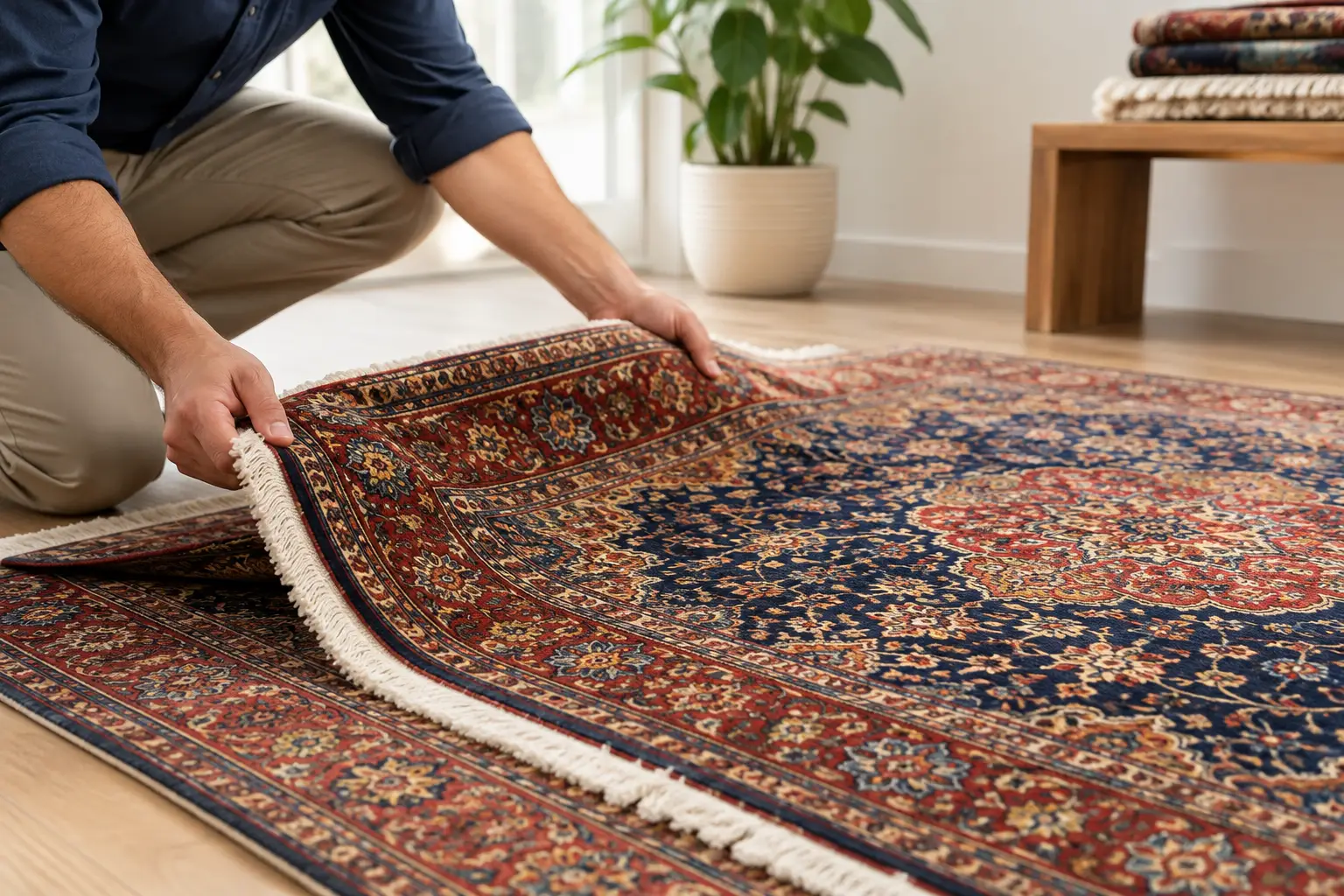
Vacuum the pile regularly, especially in entrances, living rooms, and homes with pets. Use appropriate suction and avoid aggressive beater bars on delicate, fringed, hand-knotted, or low-pile rugs. Vacuuming both sides occasionally can help release dry soil, but do not pull or run a vacuum over fringe. Fringe is part of the rug’s foundation, not a decorative add-on. It can unravel or break when caught in a vacuum head.
Rotate the rug once or twice a year if it receives uneven sun or foot traffic. Rotation prevents one end from becoming noticeably more faded or worn than the other. Window treatments and UV-filtering film can also help protect dye-sensitive rugs in bright rooms. Sun fading is gradual, so homeowners often notice it only after moving furniture or comparing the covered and exposed portions of the rug.
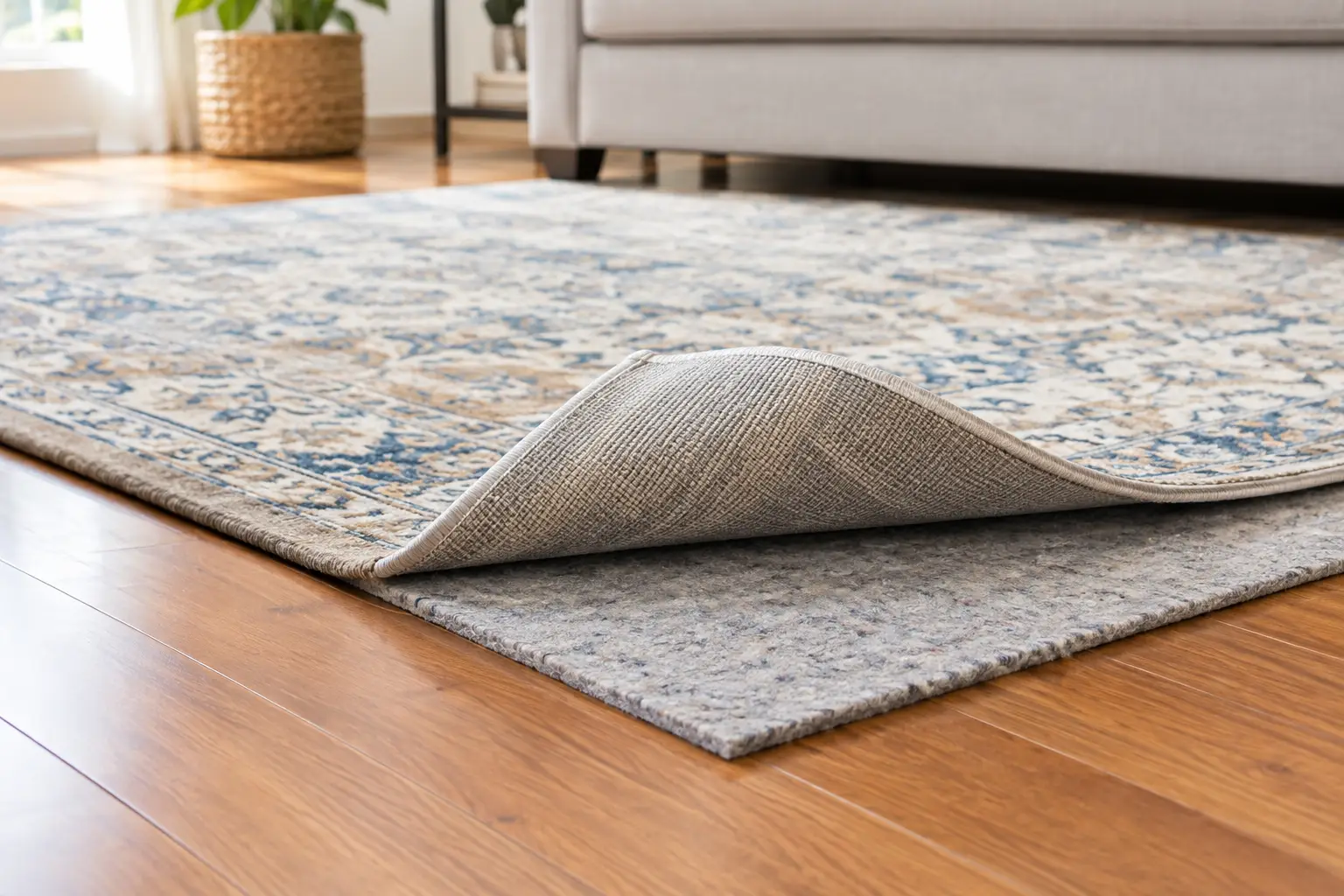
A quality rug pad is another practical form of investment protection. The right pad reduces slipping, cushions foot traffic, supports the rug’s structure, and helps prevent premature wear. It should be selected for the flooring beneath it. A pad suitable for hardwood may not be the right choice for luxury vinyl, tile, or carpet.
Keep plants, fish tanks, and humidifiers away from rugs whenever possible. A slow leak or repeated dampness can create odor, dye migration, mildew concerns, and deterioration in the foundation. Nebraska’s seasonal weather can also track in snowmelt, mud, road salt, and moisture. Place mats at exterior doors and address wet spots promptly rather than allowing them to dry unnoticed in the rug.
What to Do When a Spill Happens
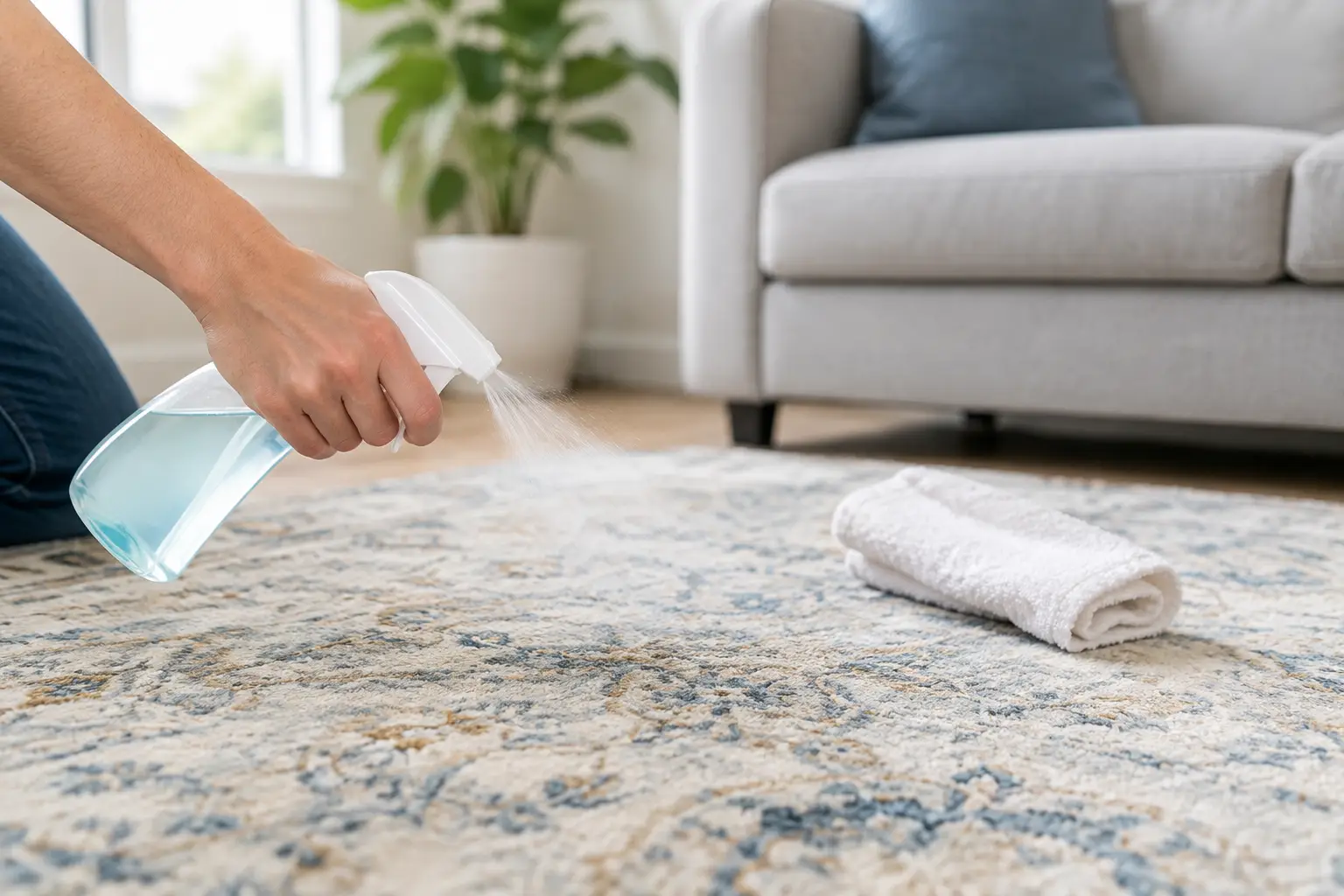
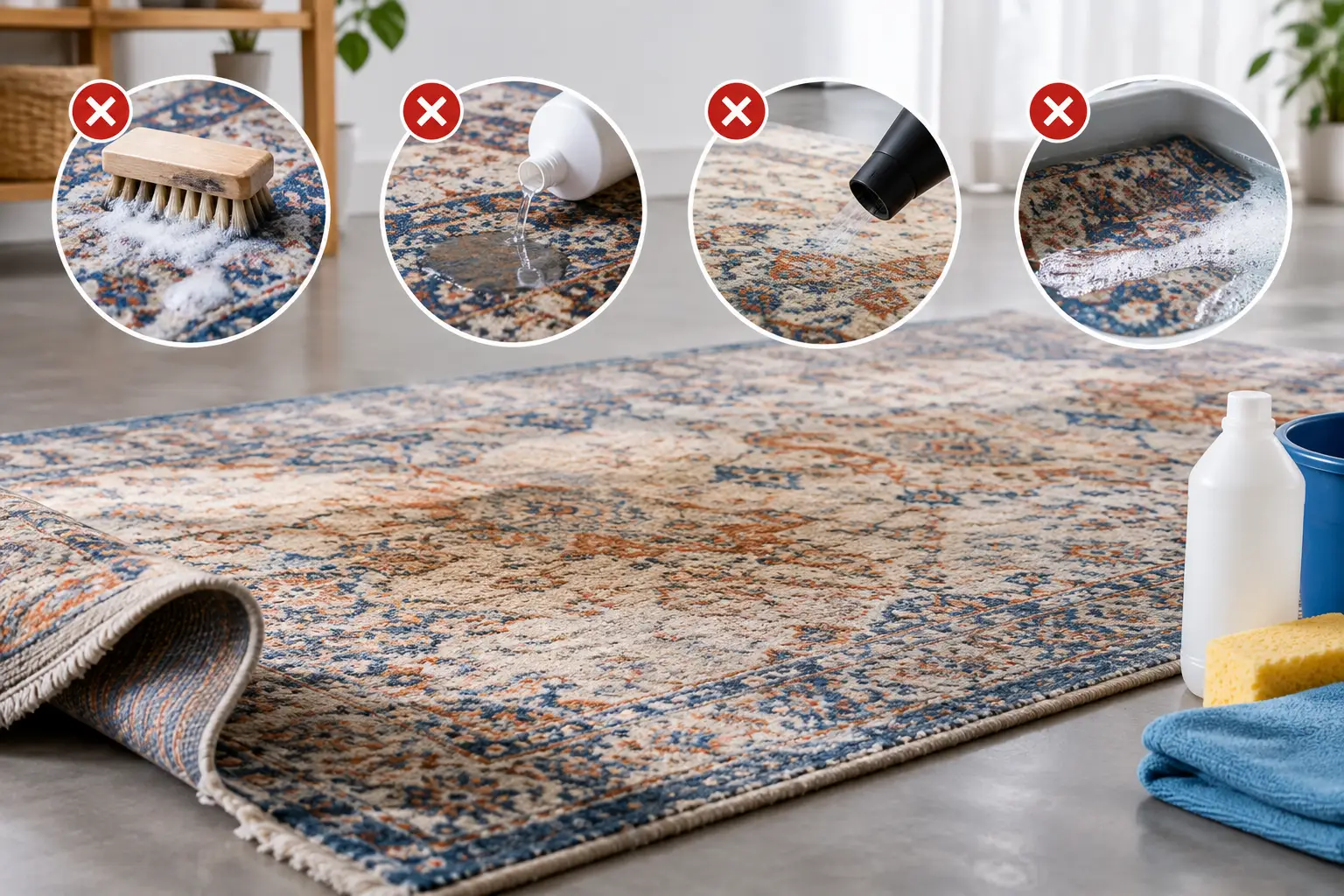
Fast, calm action can make a meaningful difference. Start by blotting the spill with clean white towels. Press down to absorb moisture, then replace the towel and repeat. Do not scrub. Scrubbing can spread the stain, distort the pile, push residue deeper, and damage delicate fibers.
Use cool water sparingly for a fresh, water-soluble spill if blotting alone does not lift it. Work from the outside edge toward the center to limit spreading. Avoid soaking the rug, especially if it has a cotton foundation, fringe, unstable dyes, or a dense pile that will be difficult to dry.
Skip harsh household remedies. Bleach, ammonia, laundry detergent, dish soap, powdered cleaners, and store-bought spot removers may alter color or leave a sticky residue that attracts more soil. Even products marketed as “natural” can be too alkaline or too strong for wool and specialty fibers.
Pet accidents deserve extra attention because the visible spot is often only part of the issue. Urine can travel through the pile into the foundation and rug pad, leaving odor-causing residue behind. If the rug still smells after surface cleaning, the contamination may require full flushing and specialized odor treatment. Covering the odor with fragrance does not remove the source.
For wine, coffee, grease, ink, paint, or unknown stains, avoid experimenting with several products in a row. Tell a rug-care specialist what spilled, when it happened, and what has already been applied. That information helps determine the safest treatment and prevents a stain from becoming harder to correct.
Know When Professional Rug Washing Is Due
A rug does not need to look filthy to need washing. Fine sand, dust, skin cells, pet dander, and dry soil settle into the foundation where household vacuuming cannot fully reach. As people walk across the rug, those particles can act like sandpaper against the fibers.
Most regularly used rugs benefit from professional washing every one to three years, though the right schedule depends on traffic, pets, children, allergies, and the rug’s location. A dining-room rug under occasional use may go longer. A wool rug in a busy family room with two dogs may need care more often.
There are several signs it is time for a professional evaluation:
- The rug feels stiff, gritty, or noticeably heavier than usual.
- Colors appear dull even after vacuuming.
- Pet odor returns when humidity rises or the room is closed.
- Fringe looks gray, yellowed, tangled, or weakened.
- The rug has ripples, curling edges, worn spots, or loose yarns.
- A spill has left a ring, sticky residue, or color change.
True area rug washing is a controlled process, not simply a quick surface extraction in the home. Depending on the rug, proper care may include dust removal, color testing, hand treatment of stains and odors, thorough washing, controlled rinsing, drying, grooming, and a final inspection. The method should be chosen for the rug rather than forcing every rug through the same process.
Protect Fringe, Edges, and Small Damage Early
The edges and fringe are often the first areas to show wear because they are part of the rug’s structure. Fringe that is pulling away, corners that curl, and side binding that begins to unravel should be addressed early. Waiting can allow a small repair to spread into more extensive foundation damage.
Do not trim fringe simply because it looks uneven unless a qualified rug professional has advised it. In some rugs, cutting fringe removes part of the foundation and can make future repair more difficult. Likewise, avoid using tape, glue, or hand stitching as a long-term fix for loose edges. These temporary solutions can leave residue or create additional damage during restoration.
Moth activity is another issue that deserves prompt action. Moths are drawn to natural fibers when rugs are soiled or stored in dark, undisturbed areas. Check rugs in storage for bare patches, loose fibers, webbing, or small larvae. Clean rugs before storage, roll them rather than folding them, and store them in a clean, dry space. A rug that has been exposed to moths may need treatment as well as repair.
Give Valuable Rugs a Plan, Not a Guess
For handmade, antique, inherited, or high-value rugs, keep simple records. Take clear photos of the overall rug, corners, fringe, labels, and any existing damage. Note where the rug was purchased if known, along with previous repairs or cleanings. This documentation can be useful for insurance, resale, restoration decisions, and tracking changes over time.
If you are moving, remodeling, or storing rugs for a season, have them cleaned first when practical. Dirt and food residue left in a rolled rug can create long-term odor and pest concerns. Never store a rug in a damp basement, directly on concrete, or in a plastic wrap that traps moisture.
When a rug needs more than routine maintenance, Omaha’s Rug Cleaning and Restoration can evaluate its condition and recommend only the cleaning, odor treatment, repair, protection, or padding it needs. A careful assessment protects both the rug and your budget.
A well-cared-for rug should keep serving your home, not become a source of worry. Treat spills gently, keep dirt from grinding into the pile, and ask for expert help before a small issue becomes permanent. Your clean rugs are waiting.