A beautiful area rug can change the feel of a room, but what sits beneath it often determines how well it performs over time. Custom cut rug padding gives your rug the stable, protective foundation it needs without showing around the edges, bunching under furniture, or creating a tripping hazard. For families in Omaha, Lincoln, and nearby communities, the right pad can also mean less wear on hardwood, more comfort underfoot, and a rug that stays where it belongs.
A rug pad is not a one-size-fits-all accessory. The best choice depends on your rug’s construction, its location, your floor type, and how the room is used. A thin runner in a busy hallway needs something different from a heavy wool rug beneath a dining table or a handmade rug in a formal living room.
Why Custom Cut Rug Padding Makes a Difference
A pad should support the entire rug while remaining hidden beneath it. Pre-packaged pads are often too small, too large, or cut into a shape that does not match the rug. If a pad extends past the edge, it can collect dirt, show from underneath the rug, and make corners more likely to curl. If it is too small, the rug’s edges may wear faster because they have no cushioning or support.
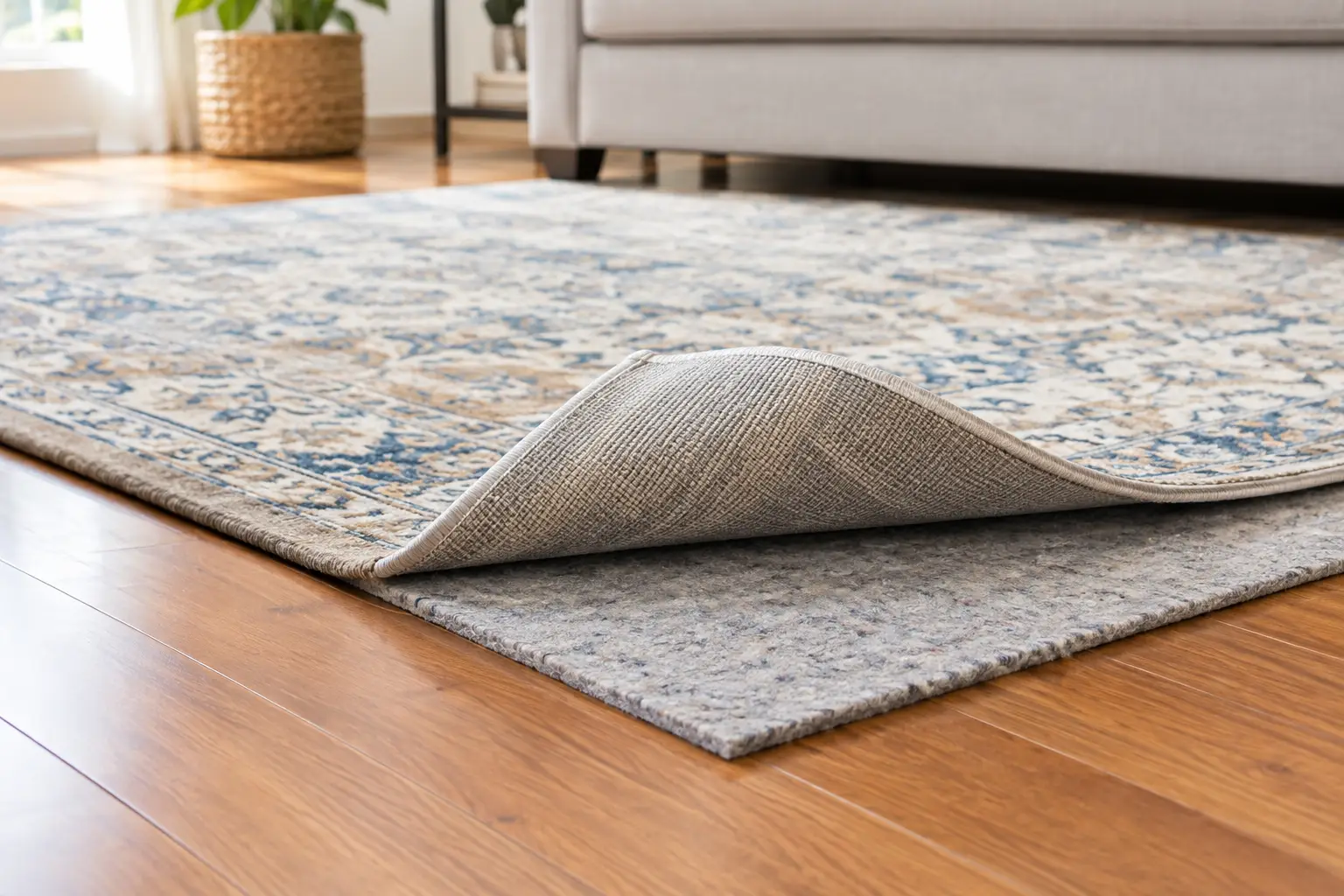
Custom sizing solves those problems. A properly cut pad generally sits slightly inside the rug’s perimeter, usually about one inch on each side. That allows the rug to lie flat while keeping the pad out of sight. For round, oval, runner, and unusually shaped rugs, careful cutting is especially useful because a rectangular stock pad rarely fits correctly on its own.
The pad also helps reduce movement. Rugs that slide can be frustrating, but they can also create a real safety concern, particularly near entryways, kitchens, stairs, and hallways. A pad with the proper grip helps keep the rug steady when children, pets, and guests cross the room.
Protecting the Floor Beneath Your Rug
Area rugs protect a floor from foot traffic, but a rug without the right pad can still cause trouble underneath. Fine grit works its way through the rug pile and settles below. Every step then presses that grit against hardwood, luxury vinyl, tile, or other surfaces. Over time, the friction can contribute to scratching, dullness, and uneven wear.
Padding creates a buffer between the rug and the floor. It absorbs some of the pressure from footsteps and furniture, reducing the abrasive effect of trapped soil. This is particularly valuable under rugs placed in busy family rooms, dining spaces, front entries, and hallways.
Floor compatibility matters just as much as cushion. Some low-cost rubber or adhesive-backed products can discolor, stick to, or react with certain flooring finishes. This is a concern with hardwood floors, newer finishes, and some vinyl products. A quality pad selected for the specific floor type is the safer choice. If you are uncertain about a floor finish or manufacturer recommendation, it is wise to ask before placing any pad beneath a valuable rug.
Choosing the Right Type of Rug Pad
There is no single best material for every home. The right pad is the one that provides the needed grip, protection, and support without changing how the rug looks or feels.
Felt pads for cushioning and preservation
Dense felt padding is often a strong choice beneath larger area rugs, wool rugs, and handmade pieces. It adds noticeable comfort, helps protect rug fibers from repeated compression, and provides a substantial base that can make a rug feel more secure. Felt is especially helpful in living rooms and bedrooms where softness underfoot matters.
Felt alone may not provide enough grip on slick floors. In those situations, a felt-and-rubber combination pad can offer cushioning with a non-slip surface underneath. Thickness is a trade-off: a thicker pad feels more luxurious, but it can raise the rug enough to interfere with door clearance or create an awkward transition between rooms.
Rubber-backed pads for grip
For rugs that tend to move, a quality rubber backing can provide the stability needed on hardwood, tile, laminate, or vinyl. These pads are often useful under runners and smaller rugs where sliding is more likely. The key is choosing a floor-safe material rather than a bargain pad that may deteriorate, leave residue, or damage a finish.
A thin grippy pad may be appropriate where door clearance is tight, but it will not deliver the same cushion or impact absorption as dense felt. In a high-traffic hallway, a combination pad often provides a better balance of grip and protection.
Low-profile pads for doors and busy transitions
Entry rugs, kitchen rugs, and rugs near swinging doors frequently need a thinner profile. A thick pad can cause a door to drag or make an edge more noticeable as people walk from one surface to another. Low-profile padding keeps the setup practical while still helping the rug stay in place.
This is one area where measuring before purchasing matters. Check the clearance at every door that crosses the rug, not just the most obvious one. A rug may lie flat today but shift slightly once the pad is installed and furniture is placed back on top.
Measuring and Cutting for a Proper Fit
A rug should be measured at its widest and longest points, rather than relying only on a listed retail size. Handmade rugs can vary slightly from their stated dimensions, and older rugs may not be perfectly square. For a custom pad, the goal is to follow the rug’s actual shape.
The pad should be trimmed slightly smaller than the rug all the way around. For most rugs, leaving about one inch of rug beyond the pad gives a clean, supported edge. A very thin or delicate rug may benefit from closer support, while a thick, heavy rug may naturally conceal a slightly smaller pad.
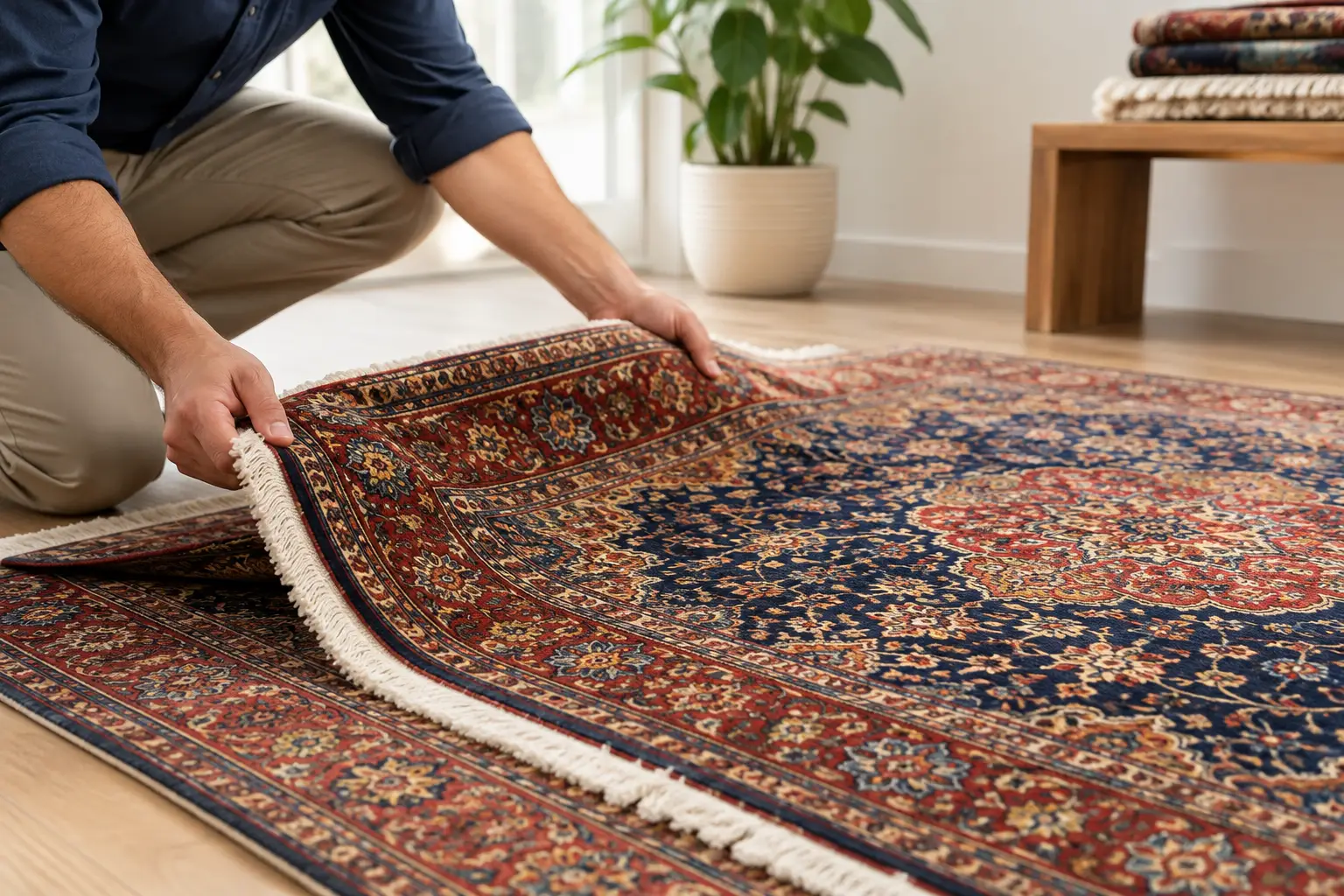
When cutting a pad at home, use a clean, flat work surface and sharp scissors or a utility blade suited to the material. Do not cut against the rug itself. Lay the rug face down, position the pad beneath it, and mark carefully before trimming. For circles, curves, or scalloped edges, make gradual small cuts instead of trying to force one sweeping cut.
That said, custom cutting is not always a satisfying do-it-yourself project. Dense felt can be difficult to trim accurately, and a crooked edge can leave part of the rug unsupported. A professional custom-cut pad is a practical option when the rug is valuable, oversized, irregularly shaped, or headed into a prominent room where every edge will be noticed.
Rugs With Pets, Odors, and Past Spills
Padding can hold onto more than dust. When pet accidents, drink spills, or moisture reach a rug, they can travel through the fibers and into the pad below. Cleaning only the rug’s surface may leave the source of an odor beneath it. In some cases, the rug can smell fresh briefly, then the odor returns as humidity rises or the rug gets warm.
If a rug has a persistent pet odor, staining, or a history of water exposure, inspect the pad as well as the rug. Depending on the contamination and pad material, replacement may be the healthier and more cost-effective choice. A fresh, properly fitted pad can be part of restoring comfort to the room after professional rug washing and odor treatment.
Pads should also be checked periodically for crumbling rubber, compressed felt, discoloration, dampness, or debris. When a rug is taken in for cleaning, it is an excellent time to assess what is happening underneath. Dirt and wear are often much easier to see once the rug has been lifted.
Give a Good Rug the Foundation It Deserves
A quality rug may carry memories, craftsmanship, and real financial value. The pad beneath it is a quiet form of protection that helps preserve all three. Omaha’s Rug Cleaning and Restoration can help you select custom-cut padding that fits your rug, your floor, and the way your home is lived in. Your clean rugs are waiting, and the right foundation helps keep them looking their best.