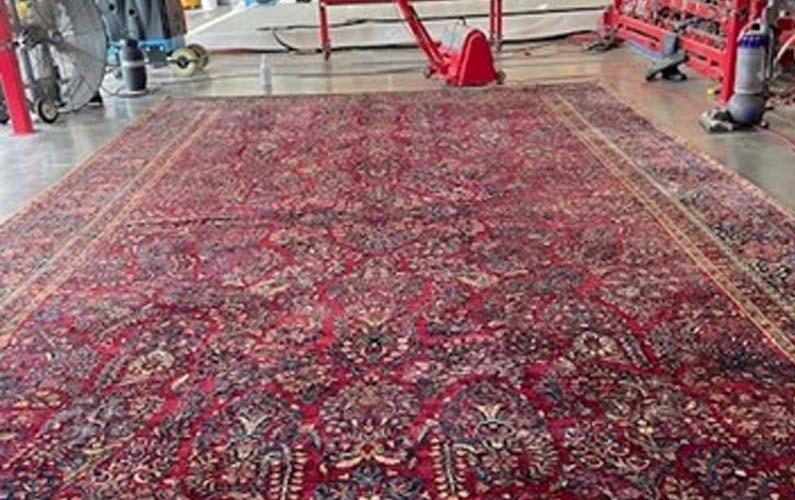
A rug can look fine on top while its foundation, fringe, and backing are holding contaminated water underneath. That is why flood damaged rug recovery is a time-sensitive restoration issue, not a wait-and-see cleaning project. Whether water entered through a basement drain, a broken pipe, a roof leak, or rising floodwater, the first hours can strongly affect whether a rug can be preserved.
Area rugs are made in layers. Wool, cotton, silk, jute, latex, dyes, and fringe all respond differently to moisture. A rug that is simply damp from a clean plumbing leak may have a good outlook when handled quickly. A rug soaked with groundwater, sewage backup, or long-standing water needs much more careful evaluation for contamination, odor, dye instability, and structural damage.
What to Do Immediately After a Rug Flood
Start by protecting people before protecting the rug. Do not enter standing water near electrical outlets or equipment, and do not handle a rug exposed to sewage or floodwater without appropriate protective gear. If the water source is unsafe, contact the proper emergency or mitigation professionals first.
Once the area is safe, remove the rug from the wet floor if you can do so without dragging it. Dragging a saturated rug can stretch fibers, tear fringe, and separate backing. Roll it loosely with the pile facing inward, especially if it is a handmade or valuable rug. Avoid folding it, since creases can set while the rug dries and place extra stress on weakened fibers.
If possible, place the rug in a dry, ventilated area off the ground. Do not leave it rolled up for long. Trapped moisture creates the dark, humid conditions that encourage mildew growth and odor. Take photos before moving the rug if you may need documentation for insurance purposes.
Resist the urge to use household methods that can make restoration harder. Do not apply bleach, disinfectant sprays, laundry detergent, or powdered deodorizers. Do not scrub the surface aggressively. And do not put a wet rug over a railing or driveway in direct sunlight, particularly if it is wool, silk, antique, or hand-knotted. Fast heat and intense sun can cause fading, shrinking, dye bleed, and distortion.
Why Flood Damaged Rug Recovery Is Different From Normal Cleaning
Routine soil removal is one thing. Flood recovery is another. Floodwater can carry fine sediment deep into the rug, along with bacteria, organic matter, salts, and contaminants that are not visible after the surface dries. Even water from a clean supply line can pull dirt, adhesives, or residues from the floor beneath the rug.
A professional rug washing process begins with identifying the rug’s fiber type, construction, dyes, and condition. This assessment matters because a machine-made polypropylene rug may tolerate a recovery process very differently than a handwoven wool rug with a cotton foundation. Some rugs can be thoroughly washed and dried with excellent results. Others need controlled treatment, color stabilization, repair, or a careful recommendation about whether restoration is worthwhile.
Odor is another reason not to judge a rug too quickly. A rug may seem acceptable once it feels dry, only to develop a musty smell several days later. That odor often indicates moisture or contamination remains within the foundation. Surface deodorizer can mask the issue temporarily, but it does not remove the source.
Clean Water, Gray Water, and Black Water Matter
The type of water involved guides the recovery decision. Clean water typically comes from a supply line, rainwater before it contacts contaminated building materials, or another sanitary source. Prompt washing and controlled drying can often save rugs affected by clean water.
Gray water has been used and may contain dirt, cleaning products, food residue, or other contaminants. Overflow from an appliance or some plumbing fixtures can fall into this category. Rugs exposed to gray water usually require more than simple drying because contamination can settle deep in the fibers.
Black water is the most serious category. It may include sewage, toilet overflow, groundwater, or water that has been sitting long enough to become contaminated. In these situations, health and safety come first. A qualified rug restoration specialist should inspect the rug before anyone attempts to clean or dry it at home. Depending on the rug’s value, material, extent of exposure, and local safety considerations, recovery may be possible, or replacement may be the safer choice.
The Risks of Drying a Rug at Home
Fans and dehumidifiers can be helpful for minor, clean-water exposure, but they are not a complete flood recovery plan for every rug. A thick wool rug can remain wet at its core even when the pile feels dry. Cotton foundations can shrink, causing ripples, buckling, or uneven edges. Jute and other plant-based materials are especially vulnerable to browning, weakening, and mildew.
Heat is also a trade-off. Warm moving air can speed evaporation, but too much heat can set stains, distort latex backing, or cause color movement. This is why proper drying is controlled rather than rushed. The goal is to remove moisture quickly enough to prevent microbial growth while protecting the rug’s shape, dyes, and construction.
Do not assume a rug with a rubber or latex backing is automatically easy to save. Water can become trapped between the face fibers and backing, and the adhesive may break down. If the backing feels sticky, brittle, or separated after drying, the rug may need a professional evaluation.
When a Rug Can Often Be Restored
Fast action improves the odds. Rugs exposed to clean water for a short time, especially durable synthetic styles, are often good candidates for professional washing and drying. Well-made wool rugs can also respond very well when contaminants are removed promptly and the foundation is dried correctly.
Value matters, but not only in dollar terms. An heirloom rug, a hand-knotted piece, or a rug that anchors a room may deserve restoration even when the process is more involved. On the other hand, a low-cost rug with severe black-water exposure, deteriorated backing, or widespread mold may not be a sensible restoration candidate. An honest inspection should consider both safety and the long-term performance of the rug.
At Omaha’s Rug Cleaning and Restoration, rugs are evaluated as textiles with their own materials and history, not treated like wall-to-wall carpet. That facility-based approach allows for thorough washing, targeted odor treatment, drying, and restoration recommendations based on what the rug actually needs.
Signs You Should Call a Rug Specialist Right Away
Some situations should not wait for the next available weekend. Arrange an inspection as soon as possible if the rug was exposed to sewage, groundwater, or visible mold; has a strong musty or sour odor; is handmade, antique, silk, wool, or valuable; shows dye bleeding; or feels heavy and wet through the foundation. The same applies when fringe is discolored, backing is separating, or the rug has remained damp for more than 24 hours.
If you are unsure what kind of water affected the rug, treat it cautiously. A quick description, photos, and details about the source of the water can help a specialist advise you on the safest next step. Save any information your insurance company may need, including photos of the affected space, the rug’s label if it has one, and receipts or appraisals when available.
After Recovery, Protect the Rug and the Floor Beneath It
Once the rug has been cleaned and dried, make sure the floor below is fully dry and properly addressed before placing it back. A restored rug placed over a damp pad, wet wood floor, or unfinished moisture problem can absorb odors and moisture all over again.
Consider the rug pad as part of the recovery decision. Many pads retain water, soil, and odor, and replacement is often the better choice after significant water exposure. A quality custom-cut pad can support the rug, reduce slipping, and provide a cleaner barrier between the rug and floor.
Watch the rug in the weeks after it returns home. New odor, waves, color changes, or a tacky backing are reasons to call for advice. Early attention is usually simpler than waiting until a small remaining problem becomes permanent.
A flood is stressful enough without guessing at the future of a rug you value. Move it safely, avoid harsh shortcuts, and get informed guidance quickly. The right care can preserve far more than a floor covering – it can help protect a piece of your home that has real comfort, history, and value.