A rug that leaves a trail of crumbly material on the floor after being moved is asking for attention. So is a rug that suddenly slides, curls at the corners, or has a stiff, cracking underside. Rug backing repair can sometimes preserve the rug, protect the floor beneath it, and prevent a manageable issue from becoming a larger restoration project.
The right solution depends on what kind of rug you own and what is actually failing. Many area rugs have a latex, felt, adhesive, or synthetic backing applied during manufacturing. Handmade rugs are different: what may look like backing is often the rug’s foundation, created by the warp and weft threads that hold every knot in place. Those materials should never be treated the same way.
What Causes Rug Backing to Fail?
Backing failure is common in machine-made rugs, especially those kept in warm, sunny rooms or high-traffic spaces. Over time, latex coatings and adhesives can dry out, become brittle, and break apart. This is often called dry rot, although it is not always caused by moisture or biological rot. It is usually material deterioration from age, heat, foot traffic, cleaning residues, and exposure to air.
Pet accidents can accelerate the damage. Urine may soak through a rug’s face fibers and reach the backing, where salts and moisture remain trapped. Even after a surface spot seems gone, contamination below can weaken adhesives and leave persistent odor. Steam cleaning or over-wetting an unstable backing can also make a fragile condition worse if the rug is not properly washed and dried in a controlled setting.
Sometimes the problem begins with the rug pad rather than the rug itself. An old rubber or PVC pad can bond to flooring, discolor hardwood, or transfer sticky residue to the underside of a rug. A rug may appear to have failed backing when the real issue is degraded pad material attached to it.
Signs You May Need Rug Backing Repair
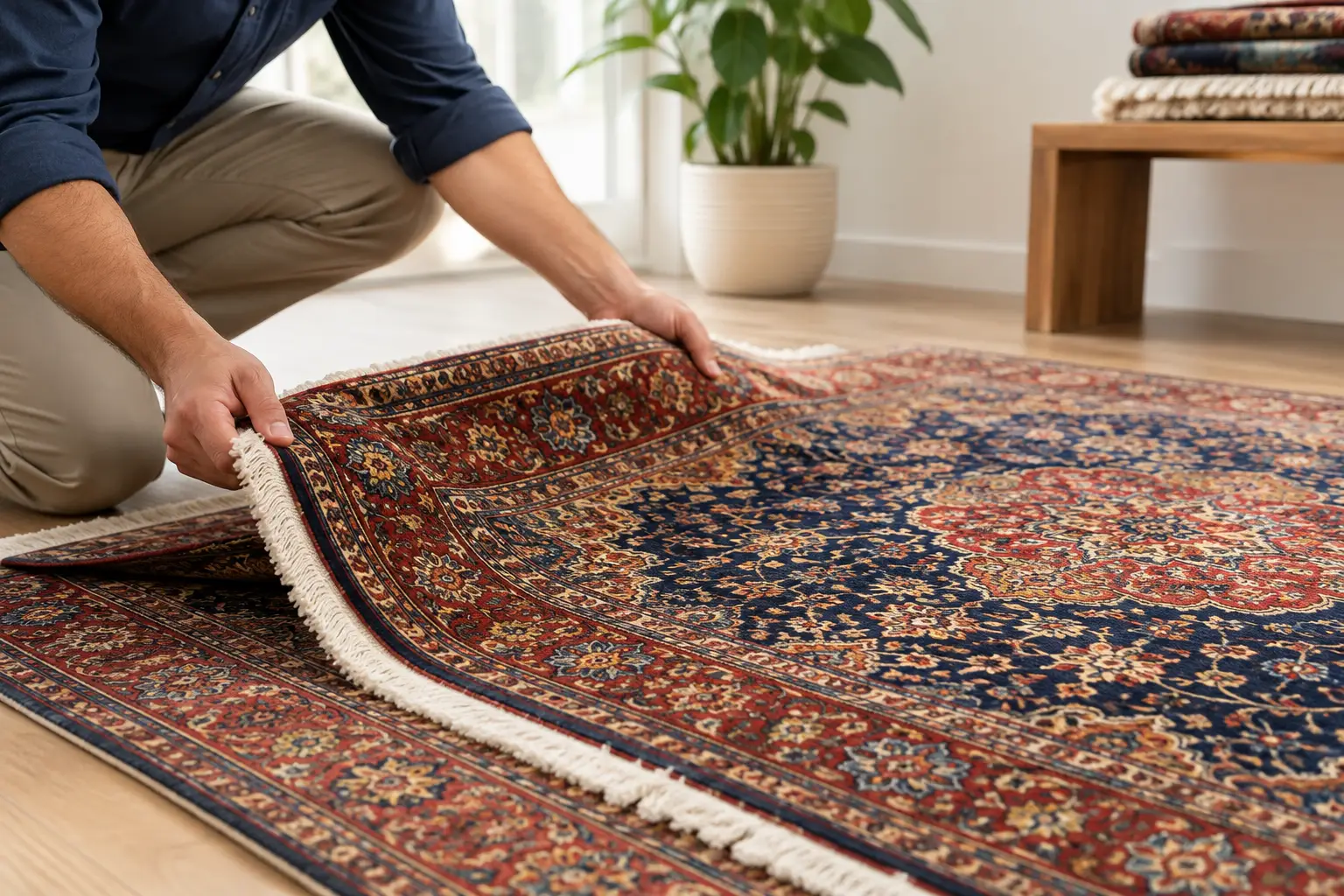
A visual inspection of the rug’s underside can reveal a lot. Turn back one corner carefully, rather than folding or sharply creasing the rug. If you see any of the following, stop aggressive vacuuming and avoid dragging the rug across the floor:
- Powdery, sandy, or flaky residue coming loose from the underside
- Cracks, bald patches, bubbling, or areas where layers are separating
- A sticky feeling, transferred pad residue, or a strong musty or pet odor
- New ripples, curling corners, buckling, or a loss of grip on the floor
These symptoms do not automatically mean a rug is beyond saving. They do mean that a professional should identify the construction before recommending a repair. Adding adhesive to a deteriorating rug without addressing the cause can trap odor, stiffen the rug, or create a visible problem at the edges.
Rug Backing Repair Is Not the Same for Every Rug
For some tufted or machine-made area rugs, localized backing separation can be stabilized. If the face yarns are still secure and the damage is limited, a qualified restoration professional may be able to reattach a separated section or reinforce an edge. This kind of work is most successful when the rug is otherwise structurally sound.
When latex backing has deteriorated throughout the entire rug, full replacement is more complicated. Removing old latex or adhesive can be labor-intensive, and a new backing changes how the rug drapes, feels, and performs. The cost may be worthwhile for a rug with sentimental, decorative, or replacement value. For an inexpensive rug with broad deterioration, replacement can be the more practical decision.
Hand-knotted, handwoven, and antique rugs require an entirely different assessment. Their foundation is part of the textile, not a layer that can simply be peeled away and replaced. Loose ends, weakened foundation yarns, holes, and unraveling may call for hand repair, reweaving, edge binding, or fringe restoration. A coating applied to the underside of a handmade rug can cause lasting harm, so this is never a good candidate for a quick adhesive fix.
Why DIY Backing Fixes Often Create Bigger Problems
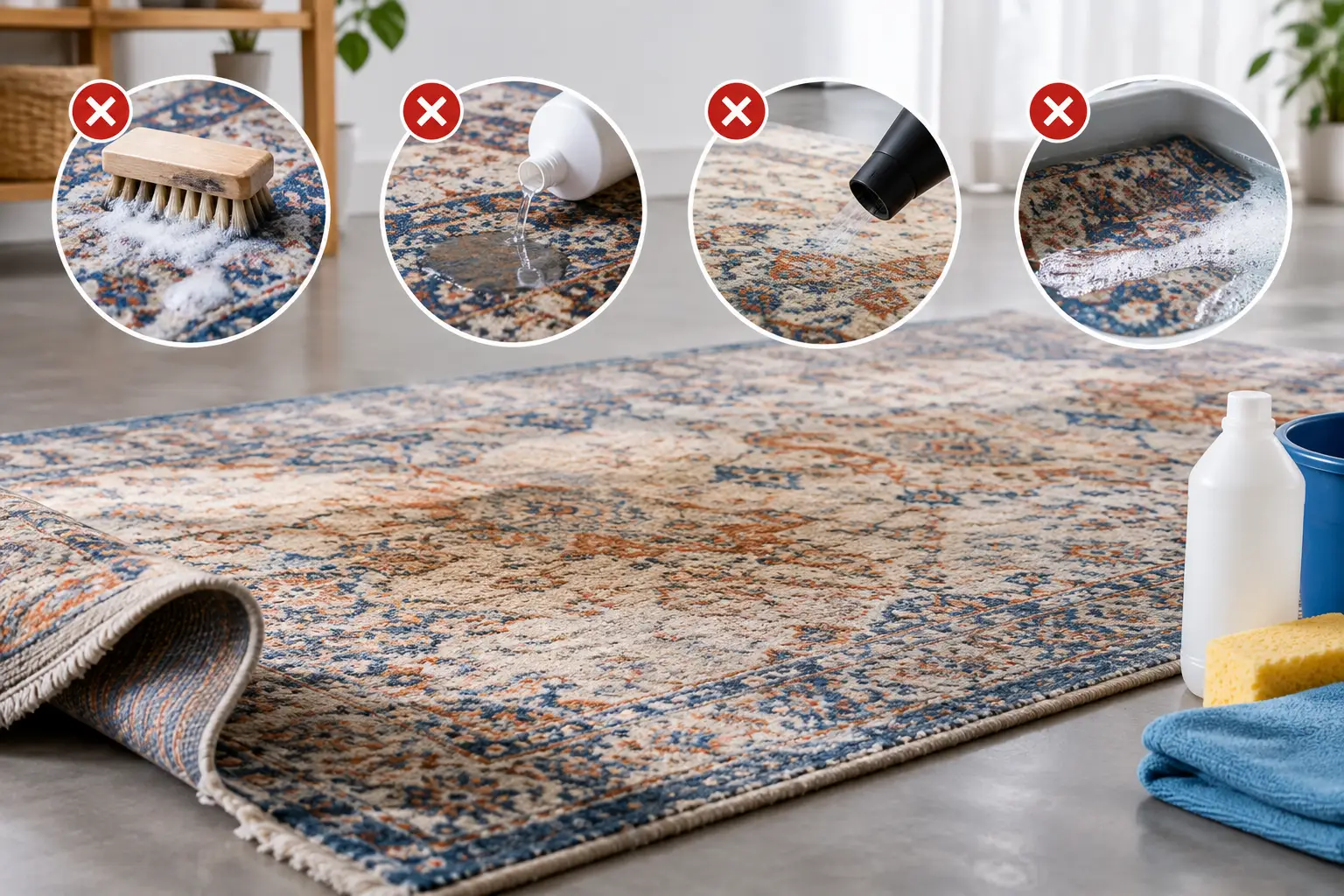
It is understandable to reach for a can of spray adhesive or a tube of glue when a rug starts shedding or lifting. Unfortunately, household fixes often solve the appearance of the issue while making future professional work more difficult.
Adhesives can soak through thin rugs and leave stiff or darkened spots on the face. They may also react poorly with latex, rubber, wool, dyes, or previous cleaning products. A rug can become harder to clean because hardened adhesive prevents proper flushing and drying. If pet odor is present, sealing the underside may hold odor-causing contamination inside rather than removing it.
Tape is another short-term fix with long-term risks. Strong carpet tape can pull fibers, leave residue, and damage finished hardwood or luxury vinyl flooring. Staples, nails, and screws should never be used to secure an area rug. They can tear the foundation and create a safety hazard.
If a corner is simply curling, a proper rug pad and professional assessment may be all that is needed. If the backing is cracking or crumbling, avoid adding moisture, heat, or chemicals until the rug has been evaluated.
Cleaning and Repair Often Need to Work Together
A dirty rug should be cleaned before structural work is performed whenever its condition allows. Soil works its way into fibers and foundations like fine sandpaper. It adds weight, dulls color, and increases abrasion each time someone walks across the rug. In a rug with pet contamination, the odor source may be far below the surface and must be thoroughly addressed before repair is considered.
Facility-based rug washing allows the entire rug to be inspected from front to back. This makes it easier to locate weakened areas, old repairs, dye instability, moth damage, and pad transfer that may not be obvious in a living room. Controlled drying is especially important for rugs with compromised backing, since moisture left in the wrong place can cause further separation, odor, or mildew concerns.
At Omaha’s Rug Cleaning and Restoration, each rug is evaluated based on its fiber, construction, condition, and the work it actually needs. A wool Oriental rug, a tufted designer rug, and a synthetic washable rug may all show similar symptoms from above, but the appropriate care can be very different.
Protect the Floor While You Decide on Repair
If you are waiting for an estimate or pickup, do not leave a crumbling or sticky-backed rug directly on hardwood. Loose latex and degraded pad material can scratch the finish when the rug shifts. Place a clean, breathable barrier beneath the affected area if necessary, and keep the rug flat in a dry indoor space. Avoid plastic sheeting for extended storage because it can hold moisture against the rug.
Do not roll a rug tightly if the backing is stiff or splitting. A gentle, loose roll may be appropriate for transport, but forcing brittle material into a tight roll can turn small cracks into larger separations. Take a few clear photos of the front, back, edges, and any residue on the floor. They can help a restoration specialist understand what they are seeing before the rug is moved.
A quality custom-cut rug pad is also part of long-term prevention. The right pad reduces slipping and movement, cushions foot traffic, and helps limit abrasion between the rug and floor. Just as important, it should be selected for the type of flooring underneath. A pad that is safe for tile may not be the best choice for finished wood.
When Replacement Is the Better Choice
Honest rug care sometimes means recommending against an extensive repair. If a low-cost machine-made rug has widespread backing loss, severe odor, major sun fading, or extensive fiber damage, investing heavily in restoration may not make financial sense. That does not mean the rug was neglected. Materials have a service life, and some manufactured backings fail regardless of how carefully a home is maintained.
For valuable rugs, handmade textiles, heirlooms, and rugs that fit a room perfectly, an assessment is still worthwhile. The decision should account for the rug’s construction, the extent of deterioration, the cost of comparable replacement, and the value it holds for your household.
A failing underside does not always mean the end of a favorite rug. Set it aside carefully, keep it off vulnerable flooring, and have the construction evaluated before attempting a fix. A clear professional recommendation can give you the confidence to restore what is worth preserving or replace what has reached the end of its useful life.