
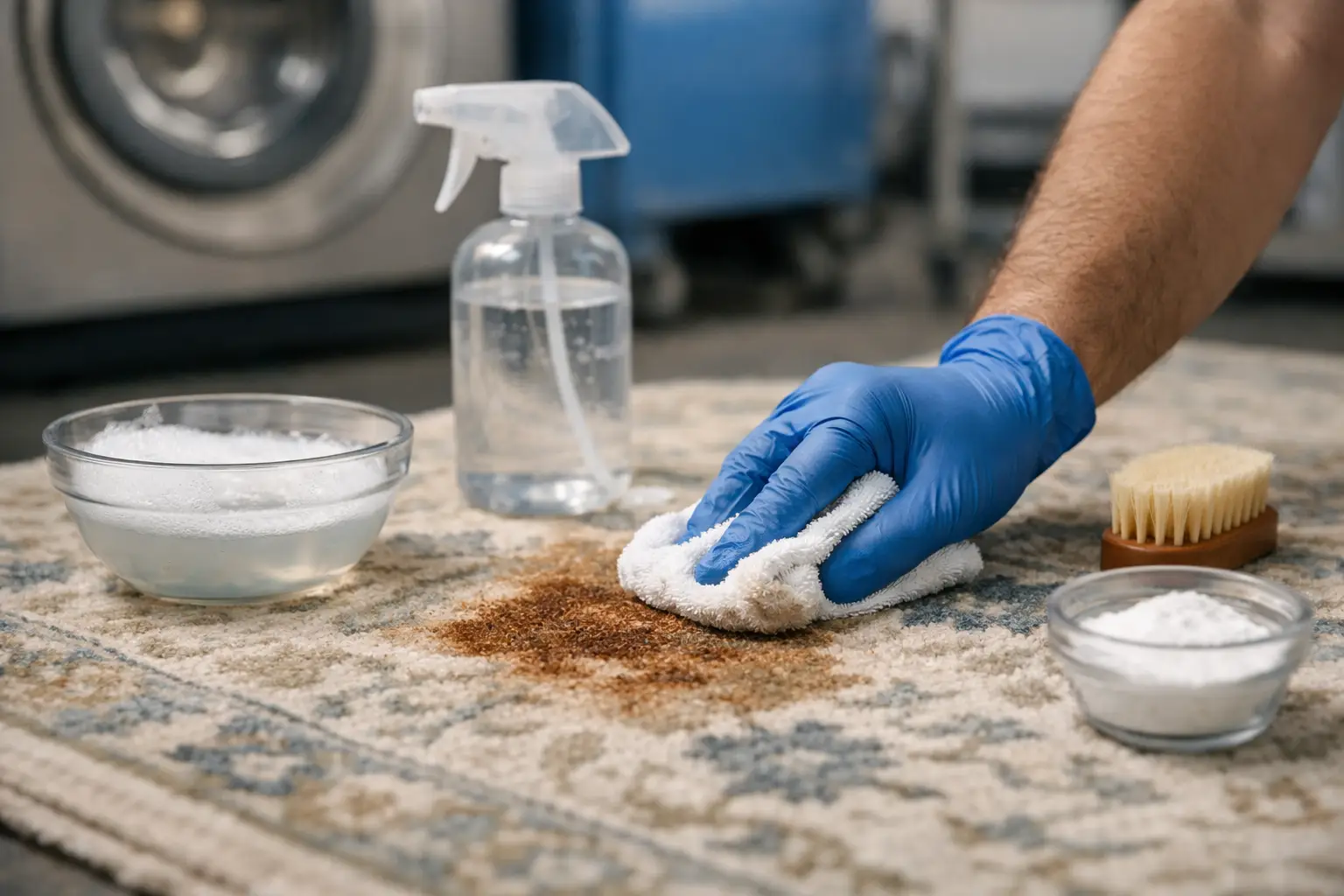
That faint coffee ring near the sofa or the mystery spot left by a former pet can be frustrating because old stains do not simply sit on the surface. As a spill dries, it can bond to rug fibers, attract soil, and sometimes affect the dyes beneath it. Knowing how to remove old stains from an area rug starts with a careful approach, not the strongest cleaner in the cabinet.
A valuable area rug is not wall-to-wall carpet. It may contain wool, silk, cotton, viscose, jute, hand-dyed fibers, fringe, or a blend of materials that react very differently to water and cleaning products. The goal is to improve the stain without creating a larger problem such as color loss, browning, fiber damage, or lingering odor.
Why Old Rug Stains Need a Different Approach
Fresh spills are usually easier to address because much of the material is still resting near the fiber surface. An old stain has had time to dry, oxidize, or wick deeper into the rug foundation. Pet accidents are especially challenging because urine salts can remain behind even after the visible mark fades, then reactivate with humidity and bring back the odor.
The stain itself also matters. Coffee, tea, wine, and juice contain natural colorants. Grease and cooking oil trap dirt. Ink, paint, and cosmetics may require very different chemistry. A brown or yellow mark can be a stain, but it can also be dye migration, residue from a previous cleaning attempt, or discoloration caused by moisture drying slowly.
That is why a one-size-fits-all stain remover can be risky. The right treatment depends on the fiber, dye stability, construction, stain source, and whether the rug has already been treated at home.
Before You Try to Remove Old Stains From an Area Rug
Start by checking the rug’s care label, if one is available. A machine-made synthetic rug may tolerate gentle spot cleaning better than a handmade wool rug. Silk, viscose, antique rugs, rugs with unstable dyes, and pieces with a cotton foundation deserve extra caution. Jute, sisal, and other natural plant fibers can darken, shrink, or develop water marks when overly wet.
Vacuum the affected area first, using a setting that will not pull or damage fringe. Dry soil can make a stain look worse, and removing it lets you see what you are actually treating. Then test any cleaning solution on a small, hidden spot, such as under a corner or along the edge. Dab, do not scrub, and check the white cloth for transferred color.
If dye comes off on the cloth, stop. If the rug has an odor, a stiff or crunchy feel, a stain larger than a few inches, or signs of prior color bleeding, skip home treatment. Those are signs the rug may need controlled washing and specialized stain or odor treatment.
A Careful Home Method for Small, Stable Stains
For a small, older stain on a colorfast synthetic or wool rug, begin with the gentlest possible method. Lightly dampen a clean white towel with cool to lukewarm water and press it onto the stain for a short time. This can soften dried residue without saturating the rug.
Next, mix a very small amount of clear, mild dishwashing liquid into water. The solution should be barely sudsy, not concentrated. Dampen another white cloth with the mixture and blot from the outside edge of the stain toward the center. Working inward helps keep the stain from spreading into a larger ring.
Do not pour the solution directly on the rug. Use only enough moisture to work at the surface, and change to a clean section of cloth as soil transfers. Follow with a separate cloth lightly dampened with plain water to remove detergent residue. Press dry towels into the area, then allow the rug to air-dry completely with good airflow.
Patience matters here. A single gentle attempt is safer than repeated wetting, rubbing, and reapplying product. Once the area is dry, inspect it in natural light. If the mark is still present but lighter, it may be safer to leave the next step to a rug-cleaning specialist rather than escalate to harsher chemicals.
For Old Pet Stains and Odors
Visible pet stains are only part of the issue. Urine can travel through the pile into the backing and foundation, where surface blotting cannot reach it. Household deodorizing sprays may temporarily cover the odor, but they do not always remove the source.
Avoid soaking the area or using steam. Heat can set certain stains, while excessive moisture can spread contamination through the rug and into the floor beneath it. A professional assessment is often the best choice when pet odor returns on humid days, the stain has spread, or the rug has been repeatedly treated without lasting results.
What Not to Use on Your Rug
The temptation to try stronger products is understandable, especially when a stain has been there for months. Yet many common home remedies create permanent changes that cleaning cannot reverse. Bleach can strip dye and weaken natural fibers. High-alkaline cleaners can alter wool’s texture and color. Powdered products can leave gritty residue deep in the pile.
Scrubbing is another common mistake. It can untwist wool fibers, fuzz the surface, distort the pile, and push staining deeper into the rug. Even a soft brush can be too aggressive for silk, viscose, antique, or hand-knotted rugs.
Be cautious with vinegar, baking soda, peroxide, and store-bought spot removers. These products may help in limited situations, but they are not universally safe. Peroxide can lighten dyes, vinegar may affect certain colorants, and baking soda can be difficult to fully remove from dense fibers. The more valuable or delicate the rug, the less room there is for trial and error.
When Professional Rug Washing Is the Better Choice
A professional rug cleaner can often improve stains that at-home spot treatments cannot because the entire rug can be evaluated and washed in a controlled facility. This matters when a stain has reached the foundation, when odors are present, or when the rug needs an even cleaning to prevent a bright spot surrounded by accumulated soil.
Professional care is especially worthwhile for handmade, oriental, antique, wool, silk, viscose, and heirloom rugs. It is also the safer route for rugs with fringe damage, color bleeding, moth activity, pet urine, or prior DIY cleaning residue. The trade-off is that professional cleaning costs more than a bottle of spot cleaner, but it can protect a rug that would be expensive or impossible to replace.
At Omaha’s Rug Cleaning and Restoration, each rug can be assessed for its fiber type, construction, dye condition, stain history, and odor concerns before the needed work is recommended. Facility-based washing also allows for more thorough rinsing, controlled drying, and restoration services when a rug needs more than a quick surface cleaning.
Help Keep the Stain From Coming Back
Old stains sometimes appear to return after drying. This is often wicking: moisture deep in the rug carries remaining soil back toward the surface as it evaporates. It can also happen when cleaning residue attracts fresh dirt. A proper rinse and complete drying process help reduce that risk.
After the rug is clean, use a quality rug pad to protect the backing, improve stability, and reduce wear from foot traffic. Address spills promptly by blotting, not rubbing, and rotate rugs periodically in high-use areas. For homes with pets, children, or busy entryways, regular professional cleaning can prevent small accidents and everyday soil from becoming long-term discoloration.
If an old stain is making you question whether a favorite rug can be saved, do not assume the worst or rush into harsh treatment. A clear photo and a careful assessment can point you toward the safest next step – and give a well-loved rug the expert care it deserves.


