A rug can look like it needs a quick clean, but many rug washing mistakes begin with that assumption. Area rugs are not wall-to-wall carpet. Their fibers, dyes, foundation materials, fringe, and construction can react very differently to water, heat, cleaning products, and agitation. A shortcut that seems harmless can leave behind color bleed, stiff fibers, curled edges, lingering pet odor, or damage that is expensive to correct.
For homeowners in Omaha, Lincoln, and nearby Nebraska communities, the safest approach starts with understanding what your rug is made of and what is hiding below the surface. Here are the mistakes we see most often – and what to do instead.
1. Treating an Area Rug Like Carpet
A common mistake is using the same rental machine, carpet shampoo, or steam-cleaning method on every textile in the home. Carpet is installed over a pad and designed for a particular kind of cleaning. An area rug may be hand-knotted wool, viscose, cotton, silk, jute, polypropylene, or a blend of several materials. It may also have a cotton foundation that reacts to moisture differently than the pile on top.
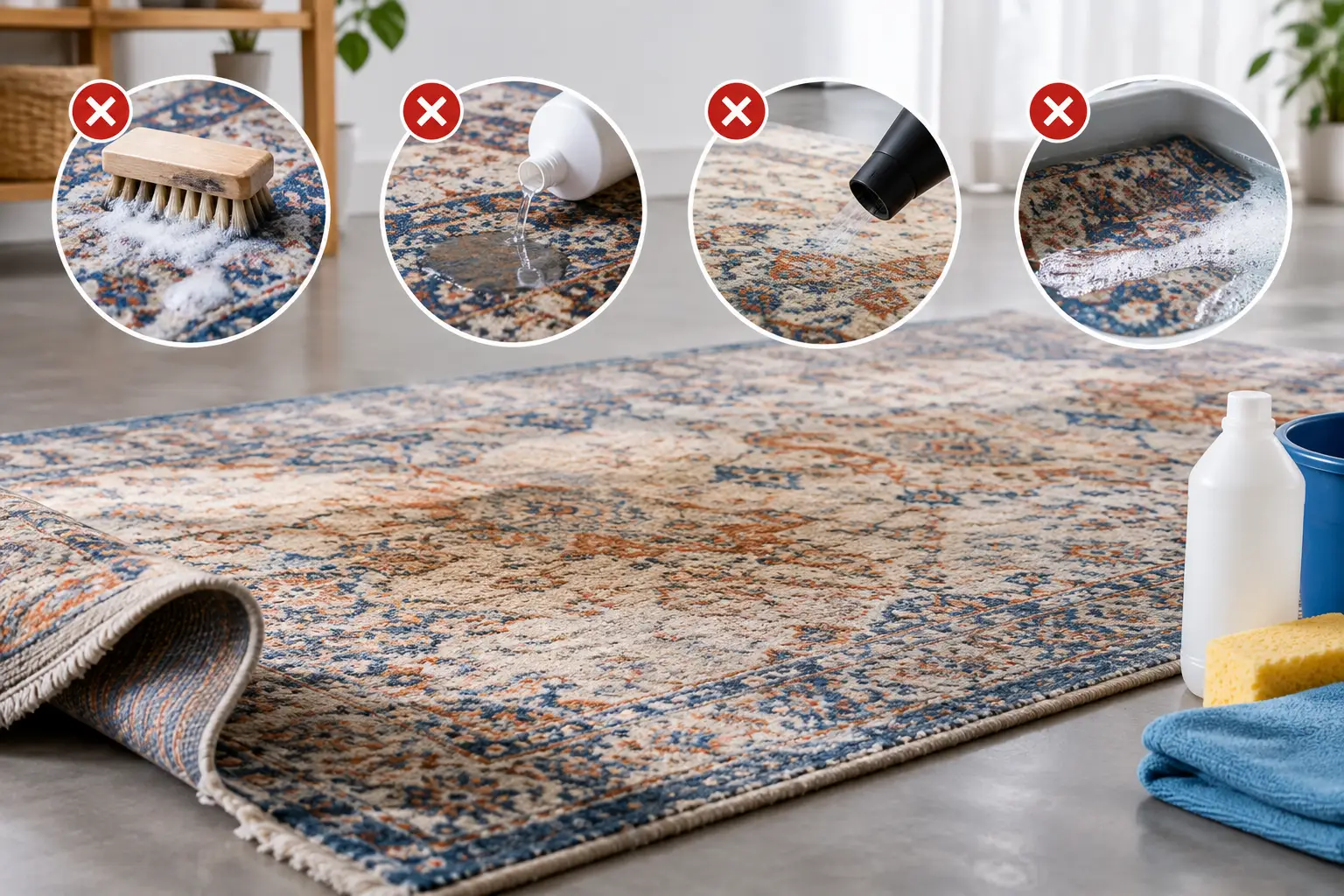
Too much moisture can create browning, shrinkage, dye migration, or a musty odor if the rug cannot dry thoroughly. Steam can flatten delicate pile or disturb unstable dyes. Heavy scrubbing can damage wool fibers and pull at fringe.
Some synthetic rugs can tolerate homeowner cleaning more readily than handmade or natural-fiber rugs. Even then, a surface cleaning does not always remove the soil settled deep in the rug. A proper washing process begins with identifying the fiber and construction, then choosing the right method for that specific rug.
2. Using Store-Bought Spot Removers Without Testing
When red wine, coffee, or a pet accident happens, acting quickly is wise. Reaching for the strongest cleaner under the sink is not always wise. Many spot treatments contain oxidizers, solvents, high-pH detergents, or bleaching agents that can alter dyes, weaken fibers, or leave a sticky residue that attracts more soil.
The risk is especially high with wool, silk, viscose, and older rugs. A product that removes the visible stain may also create a lighter spot, a rough texture, or a color change that is more noticeable than the original spill.
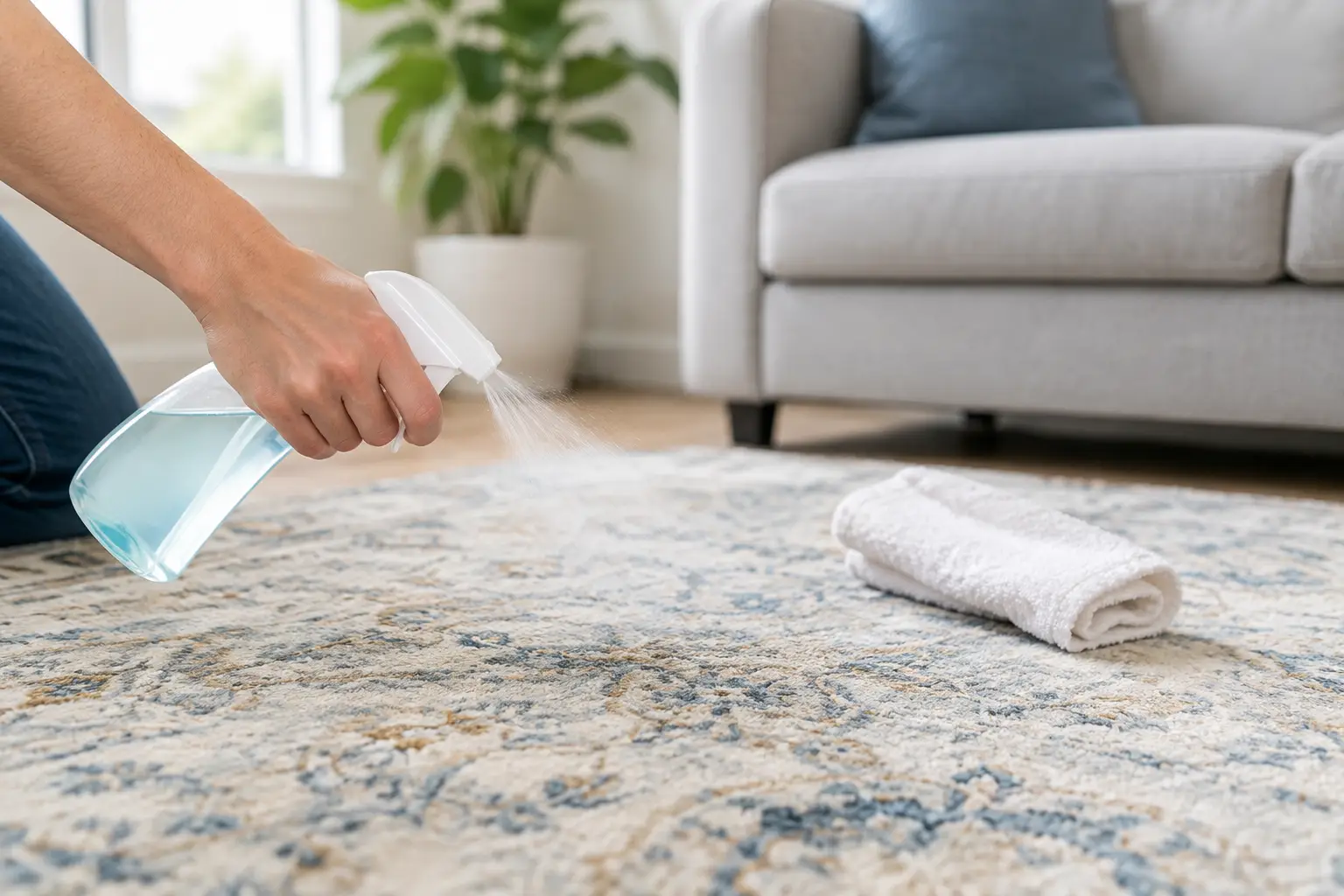
For a fresh spill, blot gently with a clean white towel. Do not rub, as rubbing pushes the spill deeper and can distort the pile. Use small amounts of cool water only if appropriate for the material, and blot again. If color transfers to the towel or the rug has delicate fibers, stop there. Taking a clear photo and getting professional guidance before applying additional products can protect the rug from a permanent mistake.
3. Saturating Pet Urine From the Surface
Pet odor is one of the most misunderstood rug problems. A homeowner may spray the top of the rug, shampoo the pile, and feel encouraged when the smell fades for a day or two. Then humidity rises or the room warms up, and the odor returns.
That happens because urine often travels beyond the surface. It can soak through the pile and foundation, into the rug pad, and sometimes onto the floor below. Surface deodorizing may mask the problem without removing the urine salts that cause recurring odor.
A true solution depends on the extent of contamination, the rug’s fibers, and whether the backing, pad, or flooring also needs attention. Thorough odor treatment often requires controlled flushing, washing, and careful drying. In some cases, the pad needs replacement because it has absorbed more contamination than the rug itself. This is one area where quick fixes frequently cost more in the long run.
4. Scrubbing Harder When a Stain Will Not Move
More force does not equal more cleaning. Aggressive brushing can fuzz wool, pull loops from hooked rugs, separate fringe, and create worn-looking patches in delicate pile. On viscose rugs, even routine friction can leave permanent texture changes or water marks.
Stain removal is a chemistry and fiber-identification issue before it is a scrubbing issue. The right treatment for grease is different from the right treatment for tannins, dye spills, pet accidents, or old mystery spots. Age also matters. Some stains can be improved significantly but not erased completely without risking the rug’s color or structure.
A reputable specialist should explain that trade-off clearly. Preservation sometimes means accepting a faint remaining stain rather than creating a bleached or damaged area. Your rug deserves that level of care, particularly if it is handmade, antique, sentimental, or costly to replace.
5. Skipping Proper Dust Removal Before Washing
A rug can hold pounds of dry soil even when it does not look especially dirty. Sand, grit, dry pet dander, and fine dust work their way down through the pile over time. Vacuuming helps with maintenance, but it does not always remove deeply embedded particulate soil.
Washing a rug before removing that dry soil can turn grit into abrasive mud. As the rug is agitated, those particles can continue rubbing against the fibers. This contributes to dull color, premature wear, and a rougher feel underfoot.
Professional rug washing is different from simply applying cleaning solution to the surface. Thorough dusting is an essential preparation step for many rugs because it removes the dry contaminants that ordinary vacuuming leaves behind. From there, the washing method can be tailored to the rug’s needs rather than forcing every rug through one carpet-cleaning process.
6. Drying a Rug Too Slowly or in Direct Heat
Drying is not an afterthought. A rug that remains wet too long can develop odor, mildew concerns, browning, and distortion. Cotton foundations are particularly vulnerable to slow drying, while wool rugs can become stiff or misshapen if handled incorrectly when wet.
At the same time, intense direct heat can be just as problematic. Laying a wet rug over a deck railing in full sun, placing it near a heater, or using excessive heat may cause uneven fading, shrinkage, or brittle fibers. It may look dry on the surface while moisture remains trapped underneath.
Controlled airflow, appropriate temperature, and correct positioning help a rug dry evenly. This is one reason facility-based cleaning matters for valuable rugs. The goal is not merely to get the rug dry quickly. The goal is to dry it safely, completely, and without creating new problems.
7. Ignoring Fringe, Edges, and the Rug Pad
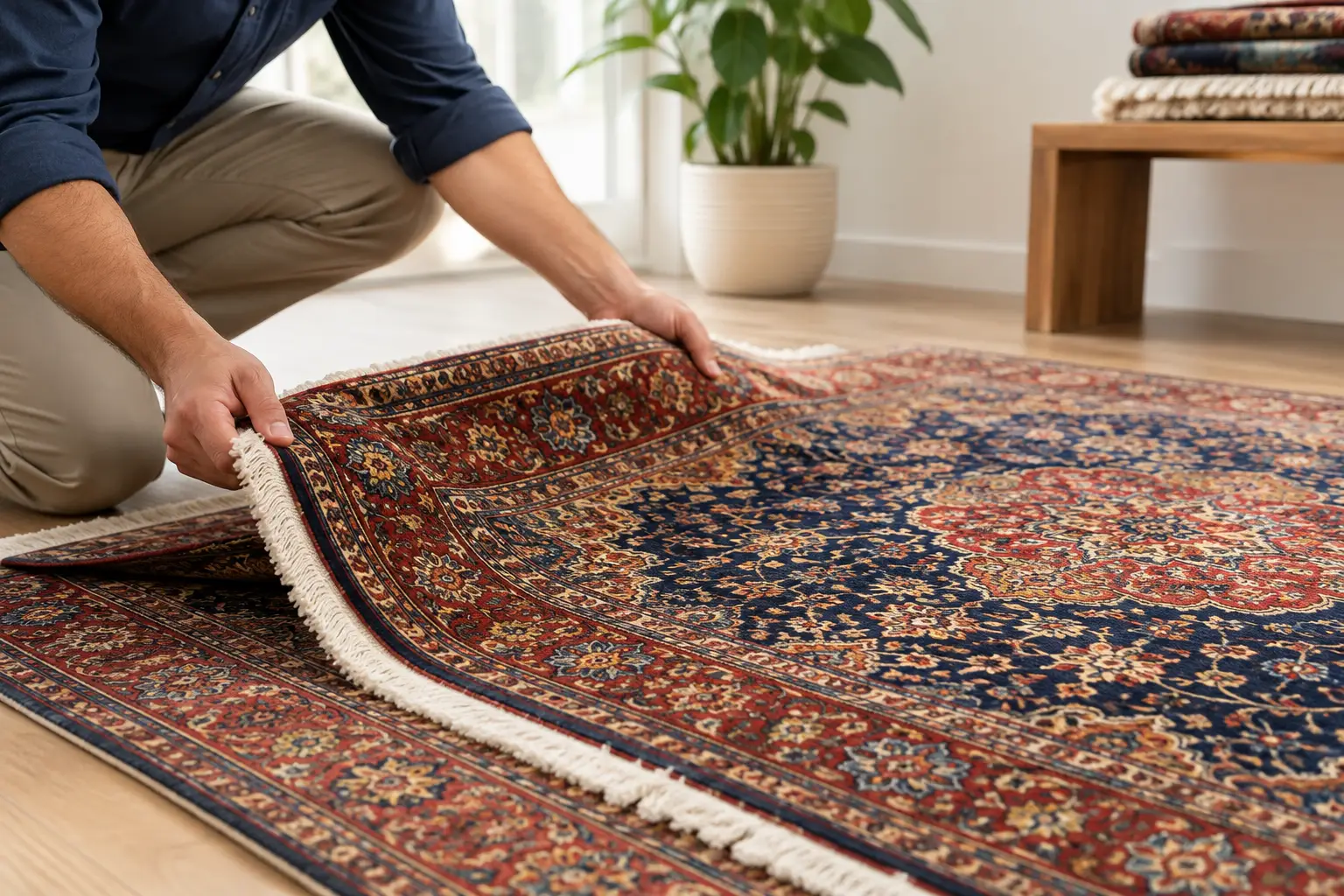
Fringe is not an accessory sewn onto every rug. On many handmade rugs, it is part of the rug’s foundation. Pulling, brushing aggressively, or using a vacuum beater bar on fringe can lead to unraveling and edge damage.
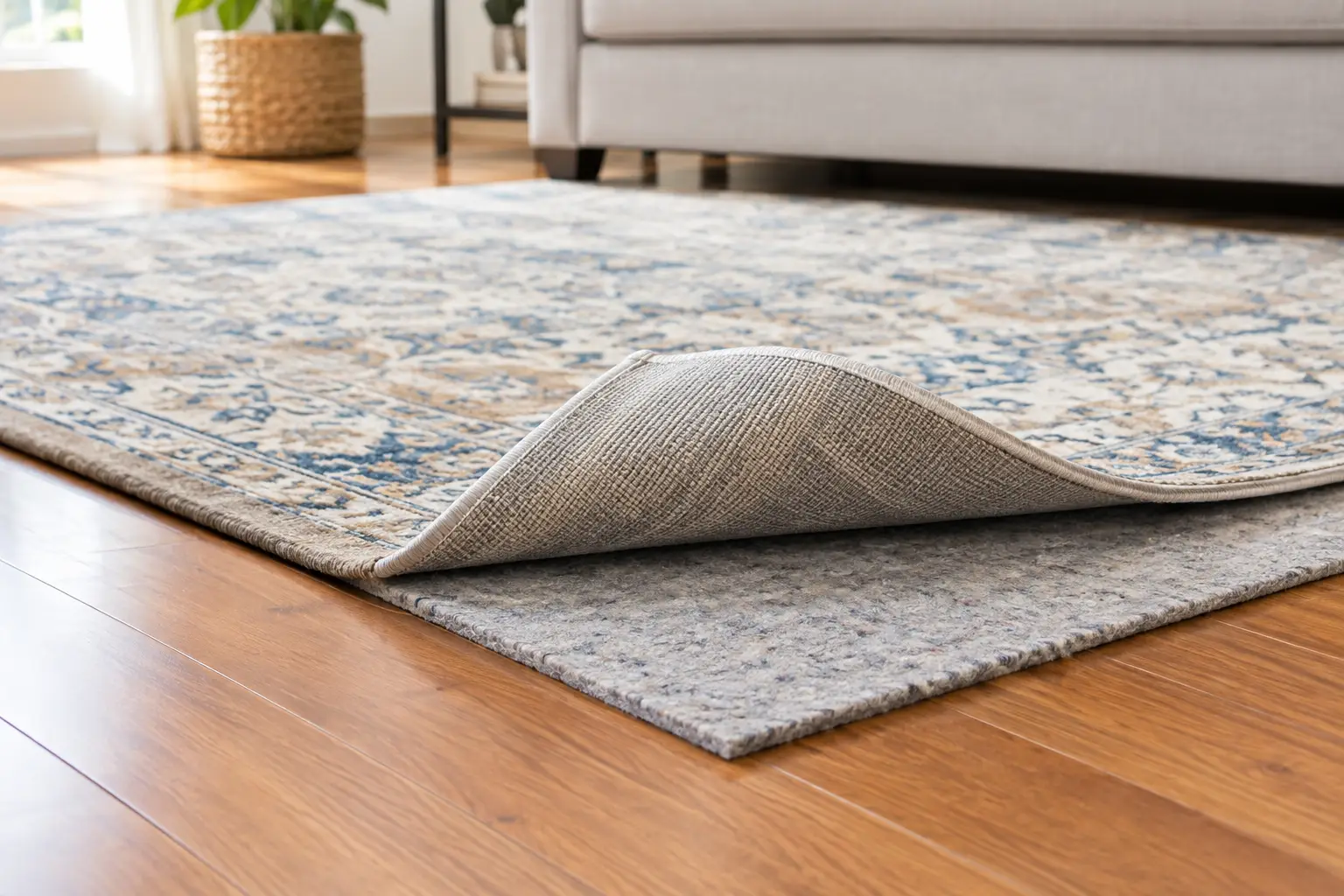
The rug pad deserves attention, too. An old, deteriorating pad can leave residue on the floor, hold pet odor, contribute to uneven wear, and allow the rug to slide. A pad that is too thick or unsuitable for the flooring can also affect how the rug lays and how quickly it wears.
Check the edges and fringe regularly, especially in high-traffic rooms. Small repairs are often easier and less costly than waiting until the foundation has opened up. A properly sized, quality pad also supports the rug, helps protect the floor, and adds comfort underfoot.
8. Waiting Until the Rug Looks Dirty
The most costly rug washing mistakes are often the ones made over years, not minutes. Dirt acts like sandpaper. Every footstep presses abrasive soil into the fibers, gradually wearing down the pile and muting the color. By the time a rug looks visibly dirty, it may have been holding damaging soil for quite a while.
How often a rug needs professional care depends on its location and use. A formal dining room rug may need less frequent washing than a living room rug shared by children and pets. Entry rugs, rugs in homes with shedding pets, and rugs exposed to smoke or frequent spills often benefit from more regular attention. If the rug is in storage, a professional inspection and cleaning before packing can also help prevent long-term odor, stain setting, and moth-related concerns.
At Omaha’s Rug Cleaning and Restoration, each rug can be evaluated for its fiber, condition, soil level, odor concerns, and needed repairs before care is recommended. Not every rug needs the same service, and doing only the work your rug needs is part of protecting its value.
When It Is Time to Ask for Help
If your rug has recurring odor, color bleed, stiff or crunchy areas, heavy soil, pet contamination, fringe damage, or a stain you are afraid to touch, it is worth getting an expert opinion before trying another product. A free estimate can give you a clear path forward without guessing.
Your clean rugs are waiting. With the right care, a favorite rug can keep bringing warmth, color, and comfort to your home for many more years.