A red wine spill on a handwoven rug, a pet accident that keeps returning after every cleaning attempt, or a dark spot left behind by a plant pot can feel permanent. But rug stain restoration is often about much more than removing what you can see on the surface. The right response can protect a rug’s fibers, dyes, backing, and value before a fresh spill becomes lasting damage.
Area rugs are not wall-to-wall carpet. Many have natural fibers, hand-applied dyes, delicate fringe, layered foundations, or construction details that react poorly to common household stain removers. A product that seems to improve the stain for an hour can cause color loss, browning, stiff fibers, or a residue that attracts even more soil later.
For homeowners in Omaha, Lincoln, and nearby Nebraska communities, the best course of action depends on the stain, the rug’s materials, and how long the contamination has been present. Quick action helps, but knowing when to stop treating a stain at home can make all the difference.
What Rug Stain Restoration Actually Means
Stain restoration is not simply spraying a spot and hoping it disappears. It is a process of identifying what entered the rug, determining how it has interacted with the fibers and dyes, and selecting a treatment that is safe for that specific textile.
A skilled rug specialist considers several questions before treatment. Is the rug wool, silk, cotton, viscose, synthetic fiber, or a blend? Is it machine-made, hand-knotted, hand-tufted, braided, or flatwoven? Has the stain changed the color of the fibers, or is there still foreign material lodged below the surface? Has a previous cleaning product altered the area?
The answer matters because a food spill and a pet urine issue are not the same kind of problem. Coffee, wine, sauces, ink, makeup, and rust each require different chemistry. Pet urine can travel through the face yarns into the backing and foundation, leaving odor-causing residue that cannot be resolved with surface cleaning alone. Water damage may create browning or dye migration. In some cases, the visible mark is only part of the restoration need.
True restoration may involve targeted stain treatment, complete facility-based washing, odor neutralization, controlled drying, color correction, or repair work. The goal is to improve the rug safely while preserving its structure and appearance.
Why Household Spot Cleaning Can Make Things Worse
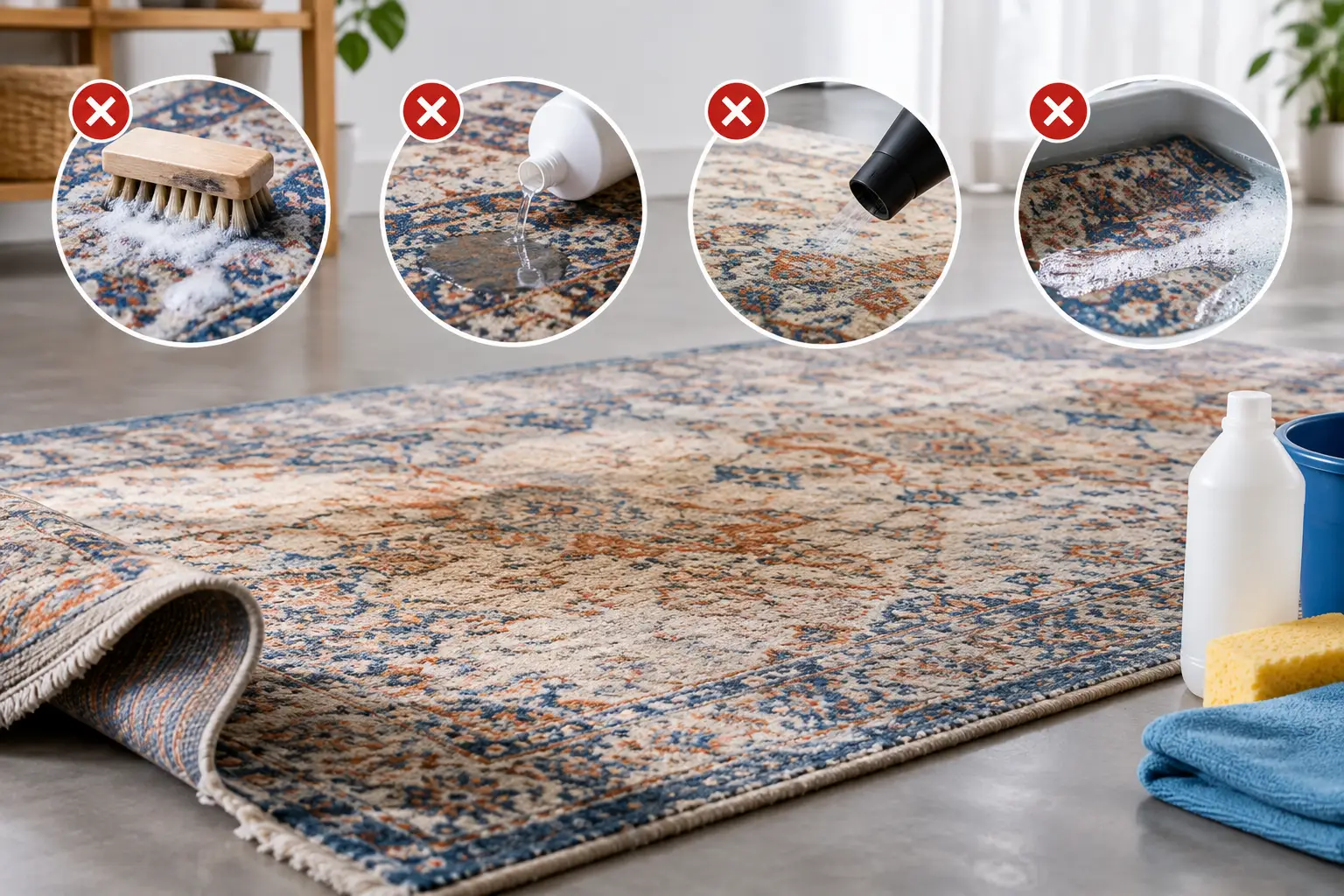
It is understandable to reach for a cleaner immediately after a spill. The problem is that many over-the-counter products are made for synthetic carpet, not valuable area rugs. They may contain strong oxidizers, high-pH ingredients, bleaching agents, or soaps that are difficult to rinse from a rug.
Wool is especially vulnerable to harsh treatment. It can lose its natural softness, develop a yellow or brown cast, or bleed color when exposed to the wrong solution. Silk and viscose require even more caution. Scrubbing can distort their sheen and permanently damage delicate fibers.
Too much water creates another concern. When moisture reaches a rug’s foundation and cannot dry quickly, it can contribute to odors, mildew risk, dye movement, or weakened backing. This is one reason an area rug should not be treated like a small piece of installed carpet.
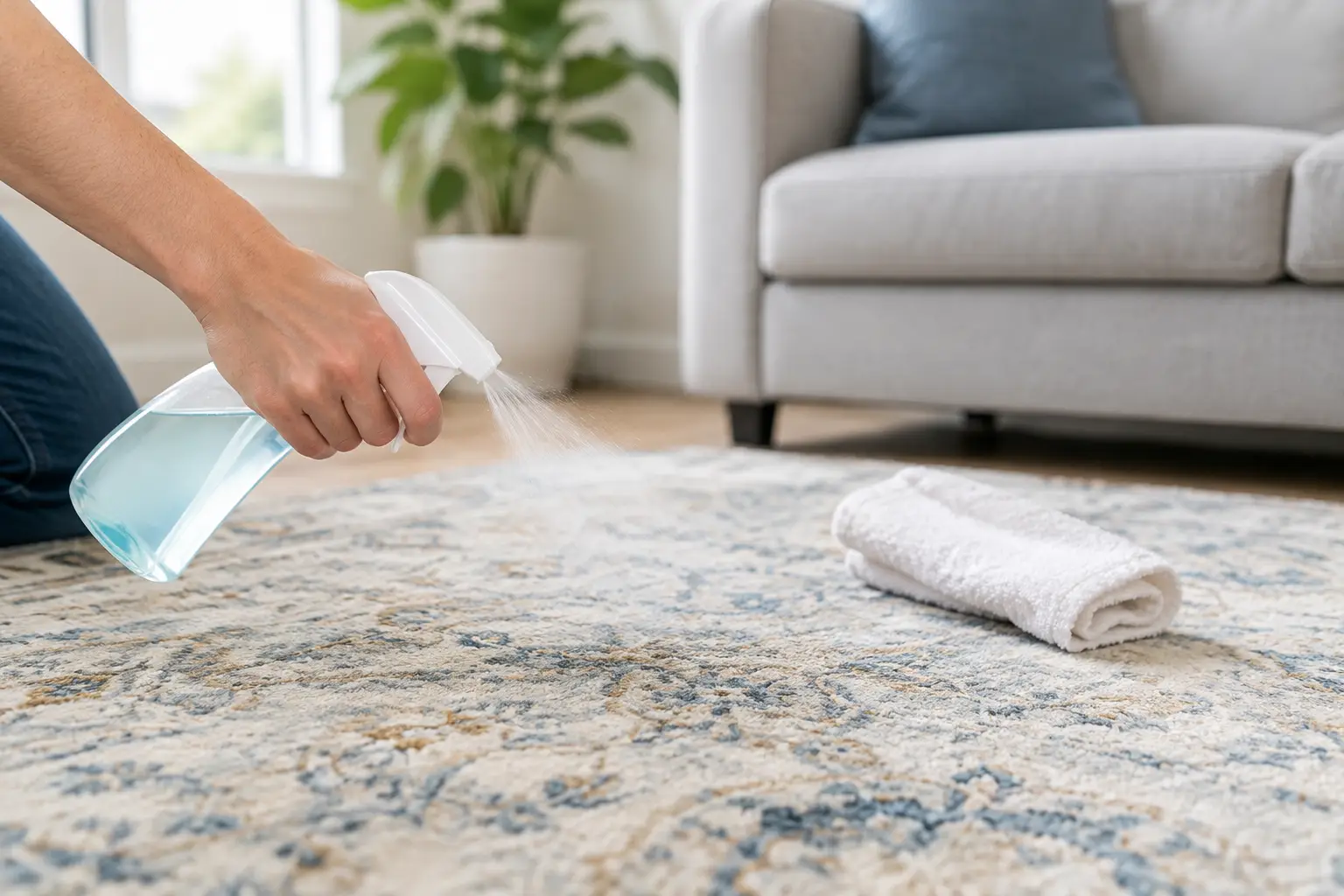
If a spill has just happened, blotting is usually safer than rubbing. Use a clean, white, absorbent towel and press from the outside of the spill toward the center. Avoid saturating the rug, using heat, or mixing multiple cleaning products. If the stain is large, oily, brightly colored, unknown, or tied to pet urine, professional evaluation is the safer next step.
The Stains That Need Professional Attention
Some stains respond well to immediate blotting and prompt professional washing. Others require specialized restoration from the start. The following situations are worth addressing before the damage becomes harder to reverse:
- Pet urine, vomit, or feces that has reached the backing or produced a lingering odor
- Red wine, coffee, tea, juice, berries, tomato sauce, and other dye-heavy food spills
- Ink, paint, nail polish, makeup, grease, wax, or adhesive residue
- Rust marks, plant-pot rings, water damage, or brown discoloration
- Old spots that reappear after cleaning or feel stiff, crunchy, or sticky
- Color bleeding, fading, fringe discoloration, or a stain on an antique or handmade rug
Age changes the restoration equation. A fresh stain is generally easier to remove because the material has not had time to bond deeply with the fibers. Still, older stains are not automatically permanent. Professional testing and controlled treatment can often achieve meaningful improvement, even when a spot has been there for months or years.
Rug Stain Restoration for Pet Accidents
Pet accidents are one of the most common reasons homeowners seek rug care, and they are also one of the easiest problems to underestimate. When urine lands on a rug, it may spread far beyond the visible area. Gravity carries it through the pile and foundation, sometimes reaching the rug pad and the floor underneath.
As urine dries, it can leave behind uric salt crystals. Humidity or future moisture can reactivate those deposits, which is why an odor may seem gone and then return on a warm day. Covering it with fragrance or treating only the face fibers does not remove the source.
Proper pet odor treatment begins with locating the affected areas and assessing the severity of contamination. Depending on the rug, treatment may include flushing, specialized odor removal solutions, full washing, and careful drying. If the rug pad absorbed contamination, replacement may be the wiser option. A quality pad supports the rug, protects flooring, and prevents a clean rug from sitting on an odor-holding surface.
There is no honest one-size-fits-all promise with severe pet damage. Results depend on the rug’s fiber type, dye stability, the age of the accidents, and whether prior products were used. But treating the entire rug in a dedicated facility often provides a far better opportunity for complete odor and stain removal than a surface-only approach.
What Happens During Professional Rug Stain Restoration
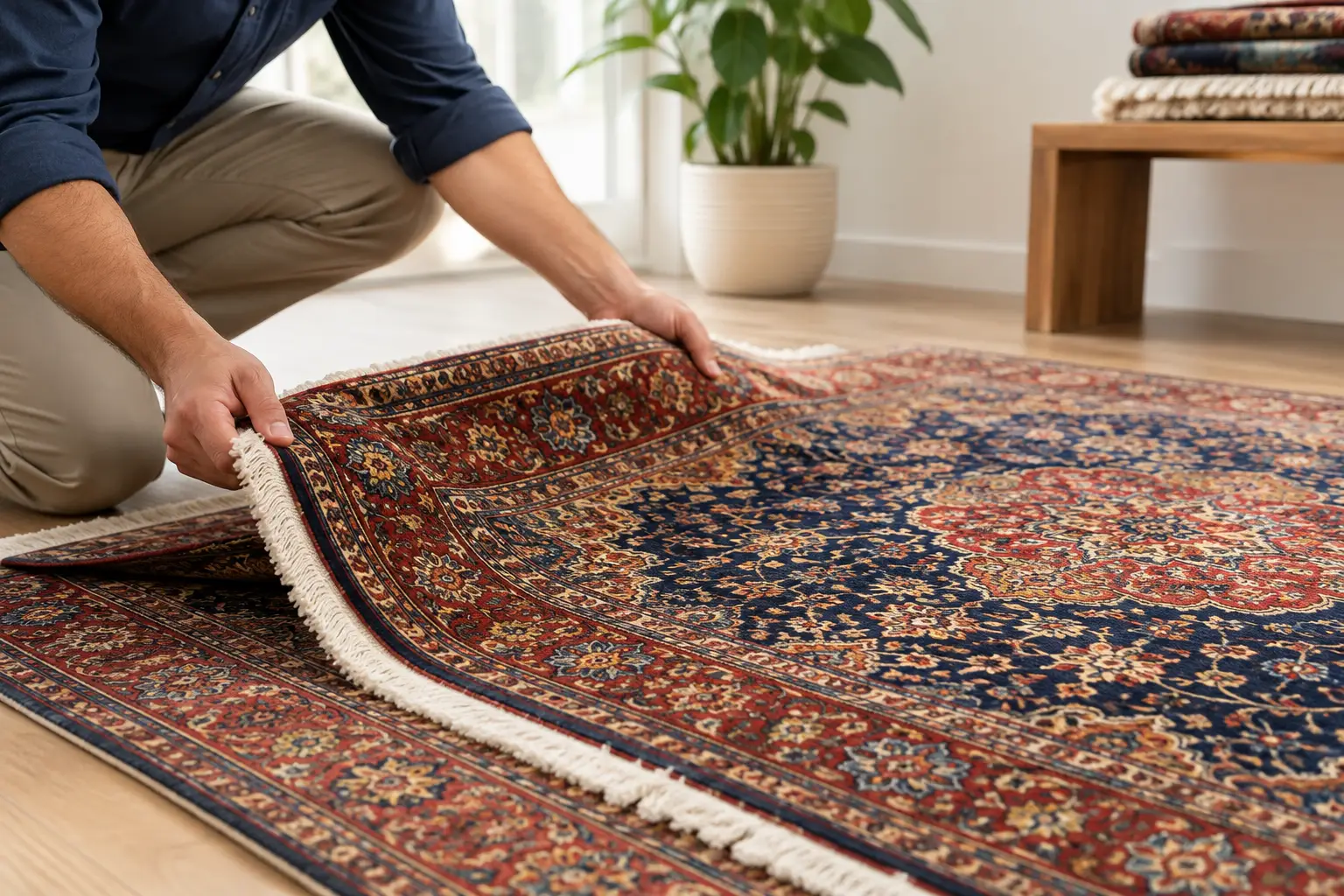
A reputable restoration process starts with inspection, not assumptions. The rug is evaluated for fiber type, construction, color stability, stains, odors, wear, fringe condition, and any pre-existing damage. This protects the rug and helps set realistic expectations before work begins.
Next comes dry soil removal. This step is easy to overlook, yet it matters. Fine grit, dust, pet hair, and embedded debris can settle deep into a rug and make stains appear worse. Removing dry contaminants before washing allows treatment solutions to reach the affected fibers more effectively.
The stain is then treated according to its source and the rug’s needs. Some rugs require gentle hand work. Others benefit from controlled immersion washing and thorough rinsing in a facility designed for area rugs. Proper extraction and drying are essential because leaving moisture or cleaning residue behind can create a new problem.
For rugs with dye loss, discoloration, damaged fringe, or weakened edges, restoration may extend beyond cleaning. Color correction and hand repair can improve a rug’s appearance and help prevent a small area of damage from spreading. Not every rug needs every service. Good care means recommending only the work that serves the rug and its owner.
When Restoration Is Worth It
The decision to restore a stained rug is personal, and it is not based on purchase price alone. A rug may be worth saving because it was handmade, inherited, chosen to fit a room perfectly, or connected to a family memory. Even a newer decorative rug can be worth professional attention if replacement would cost more than care or if the stain threatens flooring beneath it.
On the other hand, severe dry rot, extensive mold damage, or long-term pet contamination may limit what can reasonably be restored. A trustworthy specialist should explain those limits clearly. Restoration is about protecting what can be preserved, not making promises that ignore the rug’s condition.
Omaha’s Rug Cleaning and Restoration provides free estimates and can help homeowners understand whether targeted treatment, full washing, repair, or pad replacement makes the most sense for their particular rug.
Protect the Rug After the Stain Is Gone
Once a rug has been cleaned and restored, a few practical habits can help preserve the result. Use a properly sized rug pad to reduce slipping, cushion foot traffic, and provide a barrier between the rug and the floor. Rotate the rug periodically so traffic and sunlight do not wear one section faster than another. Address new spills promptly, and schedule professional washing before soil becomes embedded.
For pet households, make odor response part of the routine rather than waiting for a problem to build. For antique or handmade rugs, avoid experimenting with unfamiliar products. Taking a quick photo of the spill and noting what caused it can also help a rug-care professional choose the right treatment.
A stained rug does not have to become a discarded rug. The sooner it receives thoughtful, fiber-appropriate care, the better the chance of preserving the comfort, beauty, and investment already under your feet. Your clean rugs are waiting.