A loose thread at the edge of an area rug can look minor, especially when it is tucked beneath furniture or only visible from one corner. But rug edge repair is rarely just a cosmetic decision. The binding, serging, and fringe at a rug’s perimeter help hold the entire structure together. When that protection fails, everyday foot traffic can turn a small opening into lost pile, unraveling foundation yarns, and a much more involved restoration.
For Omaha and Lincoln homeowners, catching edge wear early is one of the simplest ways to protect a rug you enjoy every day. Whether the rug is a family heirloom, a handmade wool piece, or a favorite room-size rug that sees constant use, the right repair depends on how it was made and how far the damage has progressed.
Why rug edges begin to fray
A rug’s edges receive more stress than almost any other area. Shoes catch them, vacuum heads pull on them, furniture presses against them, and people naturally step near the perimeter when entering a room. Over time, the yarns that secure the border can loosen or break.
Moisture and improper cleaning can make the problem worse. A rug that has been cleaned like wall-to-wall carpet may be left with residue, excess moisture, or distorted fibers near the edge. Pet accidents can also weaken yarns and backing materials, particularly when urine remains in the rug long enough to affect dyes and fibers.
The construction of the rug matters, too. Machine-made rugs often have stitched binding or serged edges. Hand-knotted and handwoven rugs may have wrapped side cords and fringes that are integral to the foundation. Those are very different repairs. Applying a generic binding method to a handmade rug may stabilize one issue while changing its appearance or creating tension elsewhere.
Signs you should schedule rug edge repair
Not every stray fiber requires immediate service. Rugs shed, and a single loose yarn can sometimes be carefully tucked away. The concern is repeated or expanding damage.
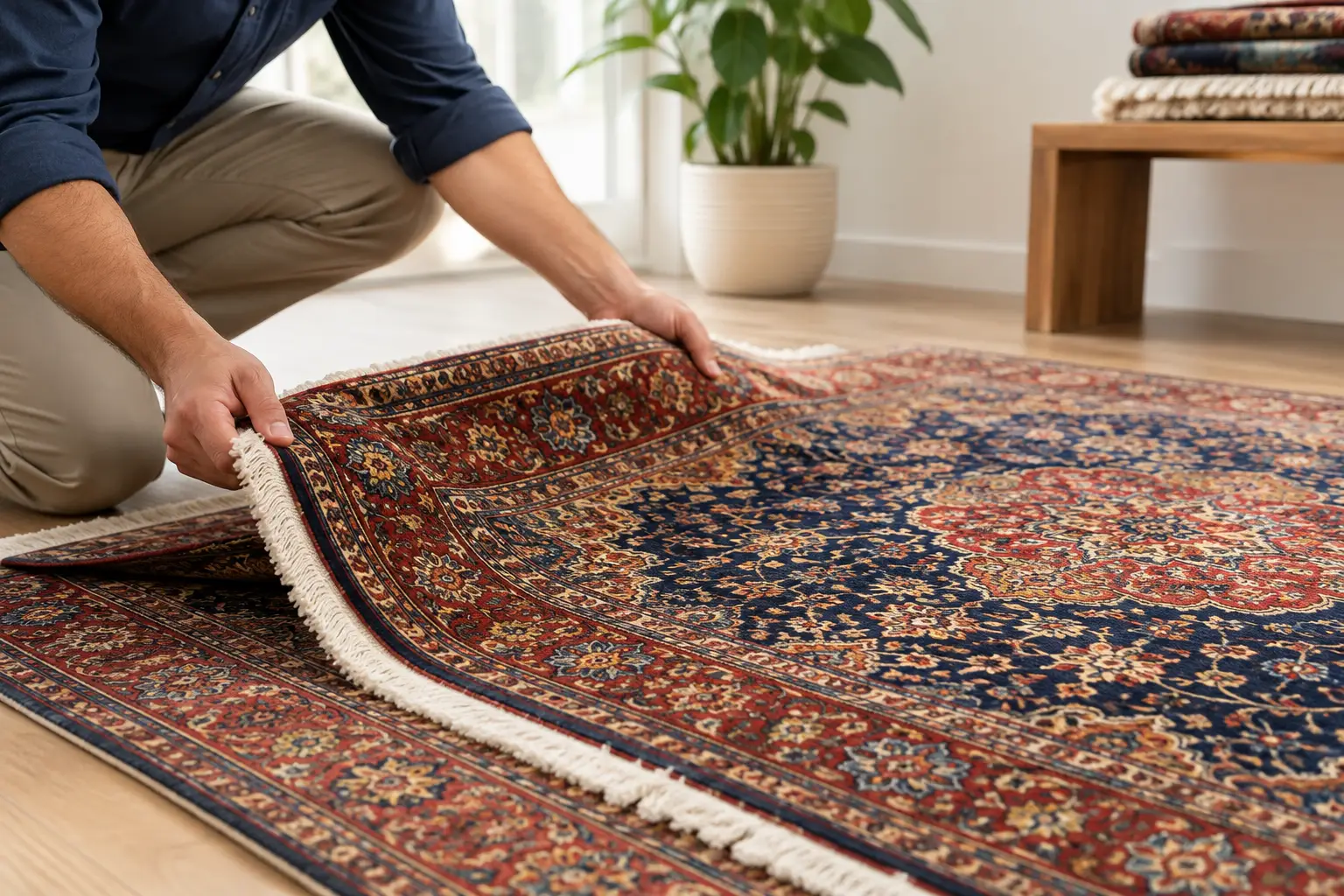
Look closely if the edge is curling upward, the binding is separating from the rug body, or the serged stitching is missing in a section. A fringe that is pulling away from the end of a handmade rug also deserves attention. Fringe is not always decorative. On many rugs, it is the visible end of the rug’s foundation, so continued loss can expose structural yarns.
Other warning signs include a border that feels thinner than the rest of the rug, foundation threads showing through, or a corner that has begun to unravel. If a robot vacuum repeatedly catches the same edge, pause its use until the rug is evaluated. Repeated snagging creates friction that can quickly enlarge a weak spot.
A good rule is this: if the damage is growing, catching on objects, or changing how the rug lies on the floor, it is time to have it inspected. Early repair is generally more conservative, less noticeable, and more economical than waiting for a border to come apart.
What professional edge repair can involve
There is no one-size-fits-all repair for a rug edge. A specialist begins by identifying the rug’s fiber, weave, age, construction, and the cause of damage. That assessment determines whether the goal is to re-secure an existing edge, replace a worn binding, rebuild a section of weave, or stabilize a foundation before additional work is done.
For many machine-made rugs, repair may involve removing damaged binding and applying a new edge treatment that matches the rug’s construction and overall look. If the original serging has worn away, a coordinated yarn can be used to rebuild the perimeter. Color matching matters, but so does tension. An edge that is pulled too tightly can cause rippling; one that is too loose may fail again under normal use.
Handmade rugs call for a more tailored approach. A repair technician may secure side cords, rewrap an edge, reconstruct missing end finishes, or reweave areas where the foundation has been affected. The aim is not simply to cover the damage. It is to preserve the rug’s integrity while respecting the pattern, materials, and character of the piece.
Fringe repair is often considered alongside edge work, but it should not be treated as an automatic add-on. Some rugs benefit from fringe stabilization or replacement. In other cases, trimming damaged fringe can be the practical choice. It depends on whether the fringe is structural, how much remains, and what result best serves the rug’s long-term use.
Why DIY fixes can create bigger problems
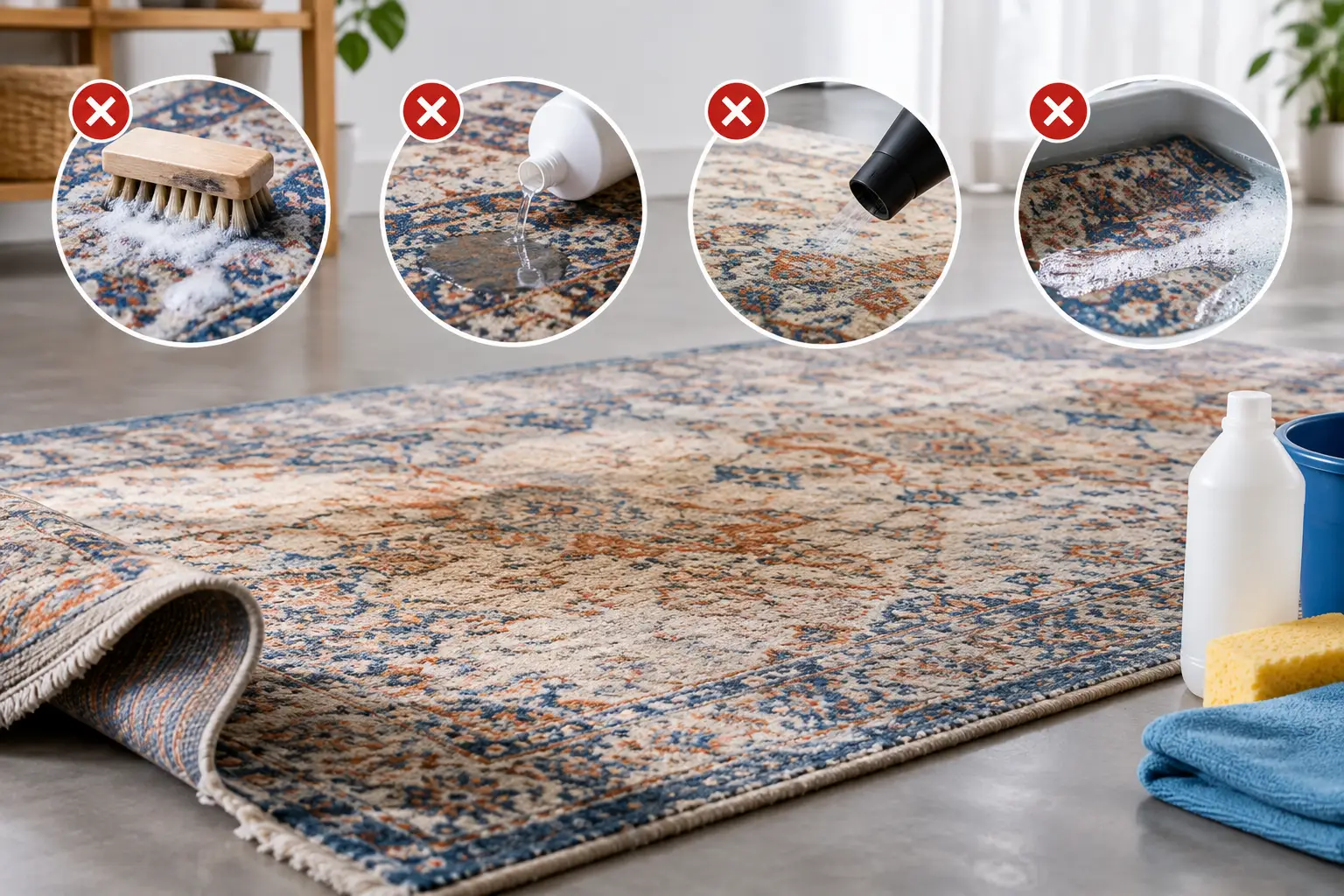
It is understandable to reach for fabric glue, tape, or a sewing kit when an edge starts to lift. For a low-value utility rug, a temporary solution may seem reasonable. The trade-off is that adhesives can harden fibers, discolor the edge, attract soil, and make future restoration more difficult. Tape can leave residue and may pull additional fibers when removed.
Home sewing presents another challenge: rugs are thick, uneven textiles. Standard thread may be too weak, too visible, or incompatible with the rug’s fiber. A stitch that passes through the wrong layers can restrict the rug’s flexibility or draw the border out of shape.
If you need to prevent further damage before an appointment, keep the loose area away from traffic. Avoid vacuuming over it, do not pull protruding yarns, and do not trim fringe without knowing whether it is part of the foundation. Rolling the rug loosely with the damaged edge protected can be safer than folding it sharply.
Cleaning and repair often belong together
Dirt acts like fine sandpaper inside a rug. As people walk across a soiled rug, grit works down into the fibers and contributes to wear, especially at edges and borders. Before certain repairs, a professional wash may be recommended so the rug can be evaluated in a clean condition and repaired without sealing in soil or odor.
That does not mean every repair requires a full wash. A rug with a small, clean edge issue may only need restoration work. But when the rug has pet odor, stains, heavy soil, moth activity, or lingering residue, addressing those concerns first can help protect the finished repair.
Moth damage deserves special attention. Moths do not damage every rug equally, but they can feed on natural fibers such as wool when rugs are stored or left undisturbed in dark areas. Edge losses that appear irregular or occur in several places should be examined before repair begins. Restoring an edge without addressing an active insect issue risks new damage later.
Protect repaired edges at home
Once a rug has been repaired, thoughtful placement and regular care help it last. A properly sized rug pad provides cushioning and helps reduce slipping, bunching, and edge curl. It also limits friction between the rug and the floor, which is particularly helpful for rugs placed on hard surfaces.
Rotate the rug periodically in rooms with strong sunlight or one main walking path. This spreads out wear and reduces uneven fading. When vacuuming, use a setting appropriate for area rugs and avoid aggressive beater bars on delicate or fringed pieces. Vacuum toward the fringe rather than pulling against it, and use an upholstery attachment around vulnerable edges when appropriate.
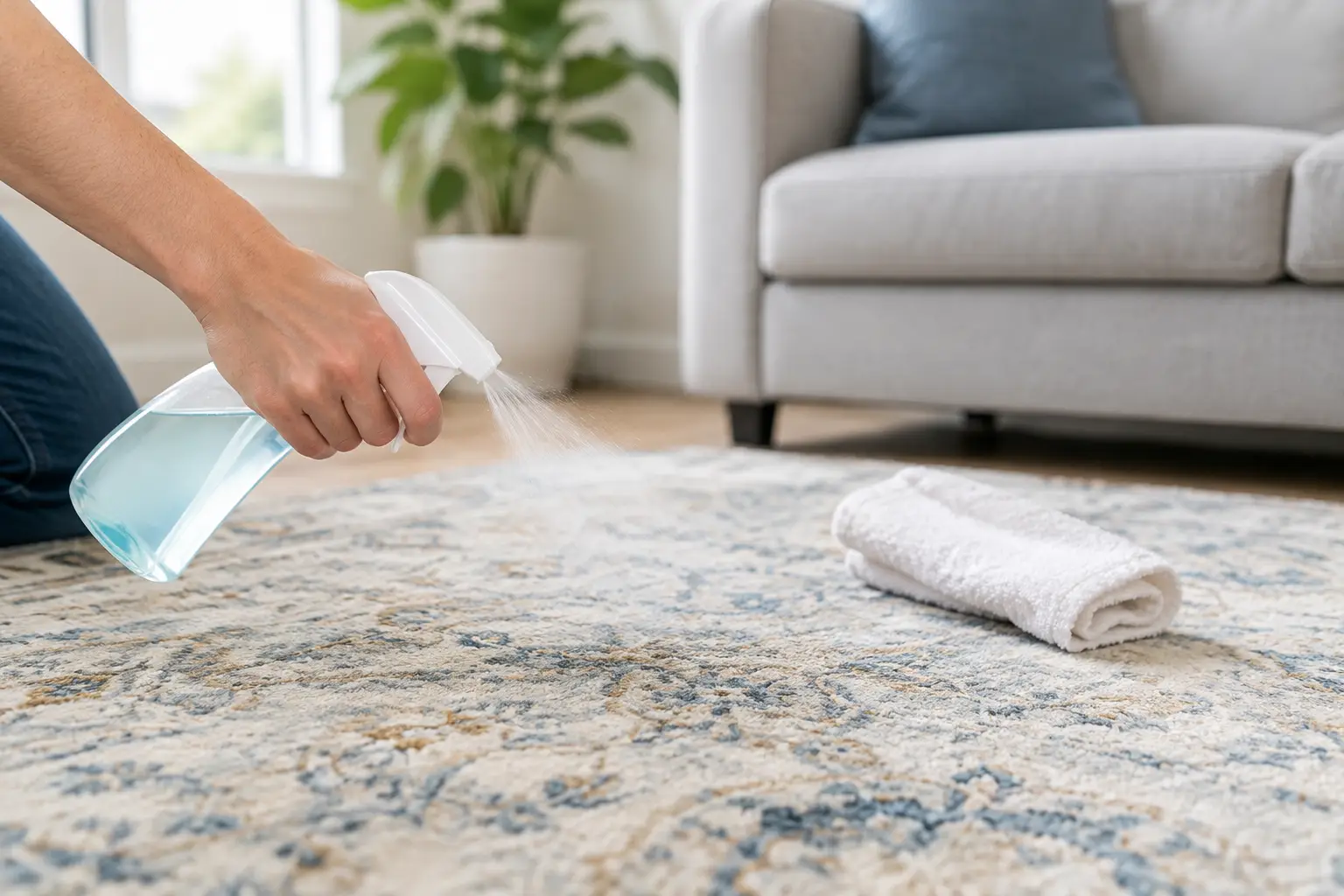
For pet owners, prompt accident treatment matters. Blot fresh moisture rather than scrubbing, and arrange specialized odor treatment if urine has reached the foundation. Surface cleaning may improve the appearance while leaving odor-producing contamination deeper in the rug.
Choosing a specialist for rug edge repair
Ask whether the provider works specifically with area rugs and whether repairs are completed with the rug’s construction in mind. A knowledgeable shop should be comfortable explaining what type of edge treatment your rug has, what caused the damage, and what repair options are realistic. The best recommendation is not always the most extensive one. Sometimes stabilization is the right choice; other times a more complete restoration better protects the investment.
At Omaha’s Rug Cleaning and Restoration, each rug can be evaluated for the care it actually needs, from cleaning and odor treatment to fringe work and detailed restoration. A clear estimate and an honest conversation about repair options make it easier to decide what is right for your home and your rug.
If an edge is starting to loosen, do not wait for it to become a missing border. Set the rug aside from heavy traffic, take a close look at the affected area, and get expert guidance while a small repair can still preserve the rug you chose for your home.