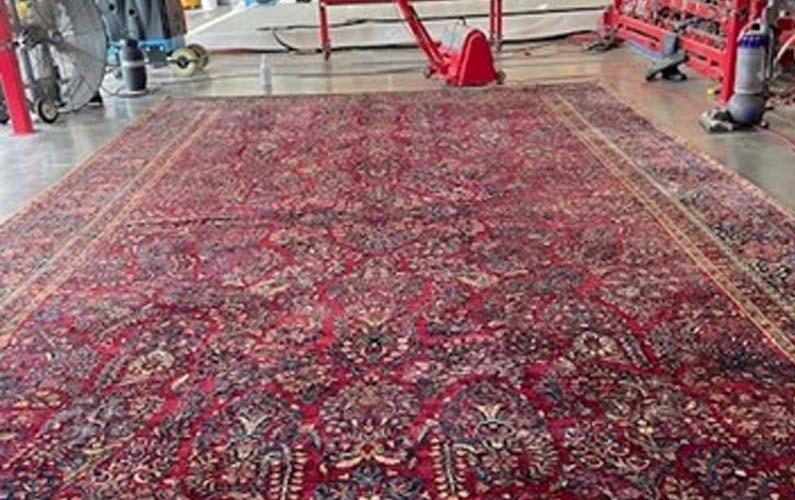
Fringe is often the first part of a rug to show wear. It catches vacuum brushes, gets pulled by pets, tangles under furniture, and can yellow or weaken after spills. If you need to repair damaged rug fringe, the right approach depends on whether the fringe is decorative, attached to the rug’s foundation, or already coming apart at the edge.
A few loose strands may be manageable with careful maintenance. But when fringe damage reaches the rug’s body, a simple cosmetic fix can allow the entire end of the rug to unravel. That is when professional restoration becomes an investment in preserving the rug, not just improving its appearance.
Why Rug Fringe Damage Can Be More Serious Than It Looks
On many handmade and hand-knotted rugs, the fringe is not an added trim. It is the exposed end of the rug’s warp threads, which form part of its foundation. Each row of knots depends on that foundation for stability. When the fringe is worn down to the edge of the pile, the knots at the end can loosen and eventually release.
Machine-made rugs are different. Their fringe may be sewn on as a decorative feature. Replacing or removing it can be more straightforward, although the binding beneath it still needs to be inspected. A rug specialist can identify the construction before recommending a repair, which matters because the wrong method can create a bulky, uneven, or unstable edge.
Fringe also hides dirt exceptionally well. Gray, matted fringe can make an otherwise clean rug look neglected, and pet accidents or drink spills may leave odors deep in the fibers. Washing the fringe correctly before a repair is often as important as the repair itself. Dirt left in the fibers can cause continued discoloration and make new stitching less secure.
Start by Looking at the Rug’s Edge
Lay the rug flat in good light and examine both the top surface and back. Do not pull on loose strands to see how far the damage goes. Instead, gently separate the fringe and look for missing knots, exposed threads, fraying along the woven edge, or a wavy border.
A small amount of unevenness is normal, particularly on older handmade rugs. The concern begins when the fringe is becoming shorter in one section, the edge binding is visible, or the pile at the end feels loose. If you can see bare foundation threads or a line of knots is opening, stop vacuuming that edge until it has been assessed.
Pet chewing deserves prompt attention. Dogs and cats may damage just one corner at first, but saliva, pulling, and repeated tugging can weaken a wider section of fringe. Rugs with moth activity require similar care. Moths may feed on wool fringe and the rug’s pile, leaving an isolated-looking problem that is actually part of a larger infestation.
When a Small At-Home Fix May Be Reasonable
Home care is best reserved for fringe that is soiled, lightly tangled, or uneven but still firmly attached. For example, you may carefully straighten clean fringe by hand, trim one or two isolated loose fibers with sharp scissors, or move the vacuum away from the rug ends.
Never cut fringe to match a damaged area if the rug’s foundation is involved. Shortening all the fringe may make the rug look more uniform temporarily, but it does not restore the lost structure. On a valuable, antique, handmade, or sentimental rug, even a minor repair should begin with an expert evaluation.
Avoid glue, fabric tape, hot glue, and iron-on binding. These products can stiffen fibers, attract soil, discolor with age, and make later restoration more difficult. They can also leave a repair visible from the front of the rug. A quick fix often costs more in the long run when hardened adhesive must be removed before the edge can be properly secured.
How Professionals Repair Damaged Rug Fringe
Professional fringe repair is not one single service. The repair should match the rug’s construction, fiber type, age, pattern, and level of damage. The work may begin with a full washing, especially when soil, odors, stains, or pet contamination are present. Clean fibers are easier to assess and safer to handle.
For a hand-knotted rug with a weakening end, restoration may involve securing the last rows of knots with hand stitching before they unravel. The remaining warp threads can then be stabilized and re-fringed where appropriate. In some cases, a specialist may recommend a clean, durable edge finish rather than recreating long fringe. This is often a practical choice for rugs in busy entryways, dining rooms, or homes with pets.
If fringe is decorative and has detached from a machine-made rug, the repair may involve removing the worn trim, rebuilding the edge, and attaching replacement fringe that suits the rug’s scale and color. Matching is not always exact, particularly on older rugs. A good repair prioritizes stability and a natural appearance over a match that looks artificially new.
Color correction may also be needed when fringe has yellowed from oxidation, water exposure, urine, or harsh cleaning attempts. Whitening treatments should be handled carefully. Some fibers respond well, while others can weaken or develop uneven color if treated aggressively.
Protect the Fringe After Restoration
Once a fringe repair is complete, a few changes in daily care can make a meaningful difference. Vacuum the rug’s field and avoid running a beater bar over the fringe or repeatedly pulling it through a vacuum head. If your vacuum allows it, use a suction-only attachment near the ends.
Rotate the rug periodically so one edge is not always exposed to foot traffic, sunlight, or a doorway. A properly sized rug pad helps too. It reduces shifting, prevents the rug from creeping across the floor, and limits the edge stress that occurs when people catch a toe or furniture leg on the fringe.
If a spill reaches the fringe, blot it immediately with a clean white towel. Do not scrub or use household spot removers without knowing how they will affect the fiber and dyes. Fringe can be cotton, wool, silk, or a synthetic material, and each reacts differently to moisture and cleaning products.
For homes with pets, address accidents as soon as possible. Urine can travel through a rug and settle in the fringe and foundation, where odor may return when humidity rises. Facility-based washing and odor treatment can remove contamination more thoroughly than surface cleaning alone.
When to Call a Rug Restoration Specialist
Call for an evaluation when fringe is missing in sections, the rug edge is unraveling, there are loose knots, or you see moth damage. The same is true for handmade rugs, heirlooms, silk rugs, and pieces with a high replacement value. These rugs deserve a repair plan that respects their original construction.
Omaha’s Rug Cleaning and Restoration provides specialized washing and hand repair for rugs throughout Omaha, Lincoln, and nearby Nebraska communities. With more than 20 years of experience, the team can assess whether your rug needs fringe restoration, edge stabilization, deep washing, or simply careful maintenance. A free estimate helps you understand the recommended work before any repair begins.
Damaged fringe does not automatically mean a rug is beyond saving. The sooner loose ends are stabilized, the more of the original rug can usually be preserved. Treat the fringe as part of the rug’s structure, give it gentle care, and let an experienced rug professional handle repairs that protect the piece for the years ahead.